2026-03-04 東京都医学総合研究所
<関連情報>
いじめと精神病体験および青少年の抑うつ症状を結びつける媒介因子としての糖化の検討 Examining glycation as a mediator linking bullying to psychotic experience and depressive symptom in adolescents
Mitsuhiro Miyashita,Zui C. Narita,Jordan Devylder,Syudo Yamasaki,Shuntaro Ando,Kazuya Toriumi,Satoshi Yamaguchi,Miharu Nakanishi,Mariko Hosozawa,Shinsuke Koike,Kazuhiro Suzuki,Kaori Baba,Junko Niimura,Naomi Nakajima,Deidre M. Anglin,Gemma Knowles,Craig Morgan,Marcus Richards,Mariko Hiraiwa-Hasegawa,Toshi A. Furukawa,Kiyoto Kasai,Atsushi Nishida & Makoto Arai
Molecular Psychiatry Published:27 February 2026
DOI:https://doi.org/10.1038/s41380-026-03521-7
Abstract
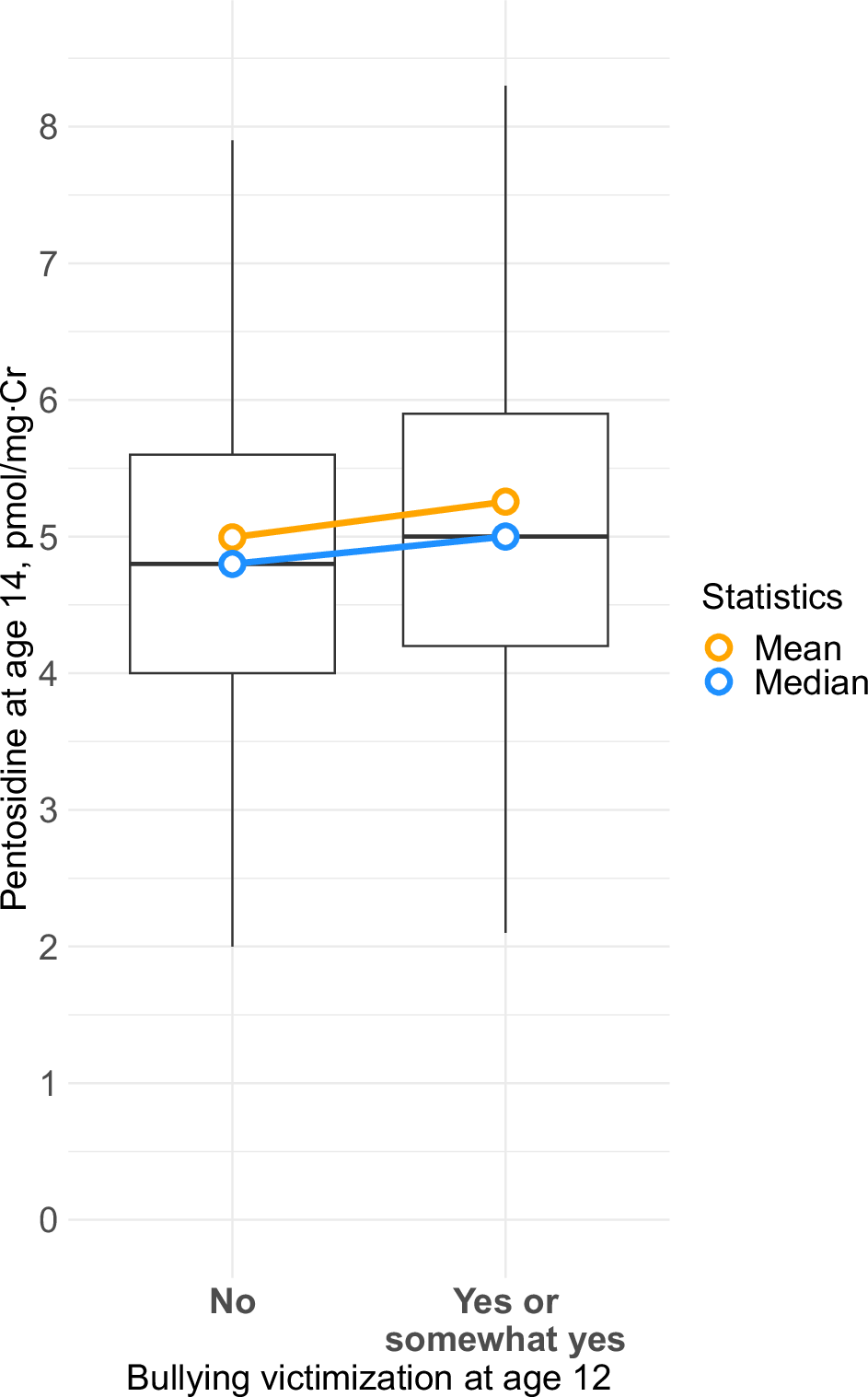
Bullying is a critical social stressor with long-lasting adverse impacts on mental health throughout life. Identifying biological mediators between bullying and subsequent mental health problems could help mitigate the long-term negative impact of bullying. However, such biological mediators have yet to be identified. This study assessed the mediating role of pentosidine, a representative glycation biomarker (i.e., pro-inflammatory aging compounds), between bullying and mental health problems among adolescents. This prospective, population-based cohort study (Tokyo Teen Cohort) included 3,158 participants. Causal mediation analysis was performed to test whether pentosidine at age 14 mediates the association between bullying at age 12 and subsequent mental health problems including psychotic experiences and depressive symptoms at age 16. Among the 3,158 adolescents aged 12 years (female, 46.9%), 473 (15.0%) were classified as being bullied. Bullying was associated with higher pentosidine levels (adjusted β [95% confidence interval], 0.27 [0.14–0.41]: P < 0.001) at age 14, and pentosidine at age 14 was associated with psychotic experiences (adjusted β [95% confidence interval], 0.02 [0.001–0.03]: P < 0.01) and depressive symptoms (adjusted β [95% confidence interval], 0.21 [0.09–0.32]; P < 0.001) at age 16. Pentosidine mediated 28.0% and 19.2% of the association between bullying and psychotic experiences and depressive symptoms, respectively. The mediating role of pentosidine was consistent across sexes. Higher levels of pentosidine possibly caused by bullying suggest that accelerated aging may begin from adolescence partly due to social stress. Future research should explore whether reducing pentosidine mitigates the adverse impact of bullying on subsequent mental health problems.