2026-03-11 スタンフォード大学
<関連情報>
- https://news.stanford.edu/stories/2026/03/gut-brain-cognitive-decline-research-aging
- https://www.nature.com/articles/s41586-026-10191-6
腸管内受容機能障害が加齢に伴う認知機能低下を引き起こす Intestinal interoceptive dysfunction drives age-associated cognitive decline
Timothy O. Cox,Ashwarya S. Devason,Alan de Araujo,Sydney Mason,Madhav Subramanian,Andrea F. M. Salvador,Hélène C. Descamps,Junwon Kim,Yixuan Zhu,Lev Litichevskiy,Sunhee Jung,Won-Suk Song,Adrián Cortés-Martín,Nathan T. Henderson,Kuei-Pin Huang,Thao Nguyen,Wisath Sae-Lee,Iboro C. Umana,Maria Sacta,Ryan J. Rahman,Stephen Wisser,J. Andrew D. Nelson,Ilona Golynker,Alana M. McSween,… Christoph A. Thaiss
Nature Published:11 March 2026
DOI:https://doi.org/10.1038/s41586-026-10191-6
Abstract
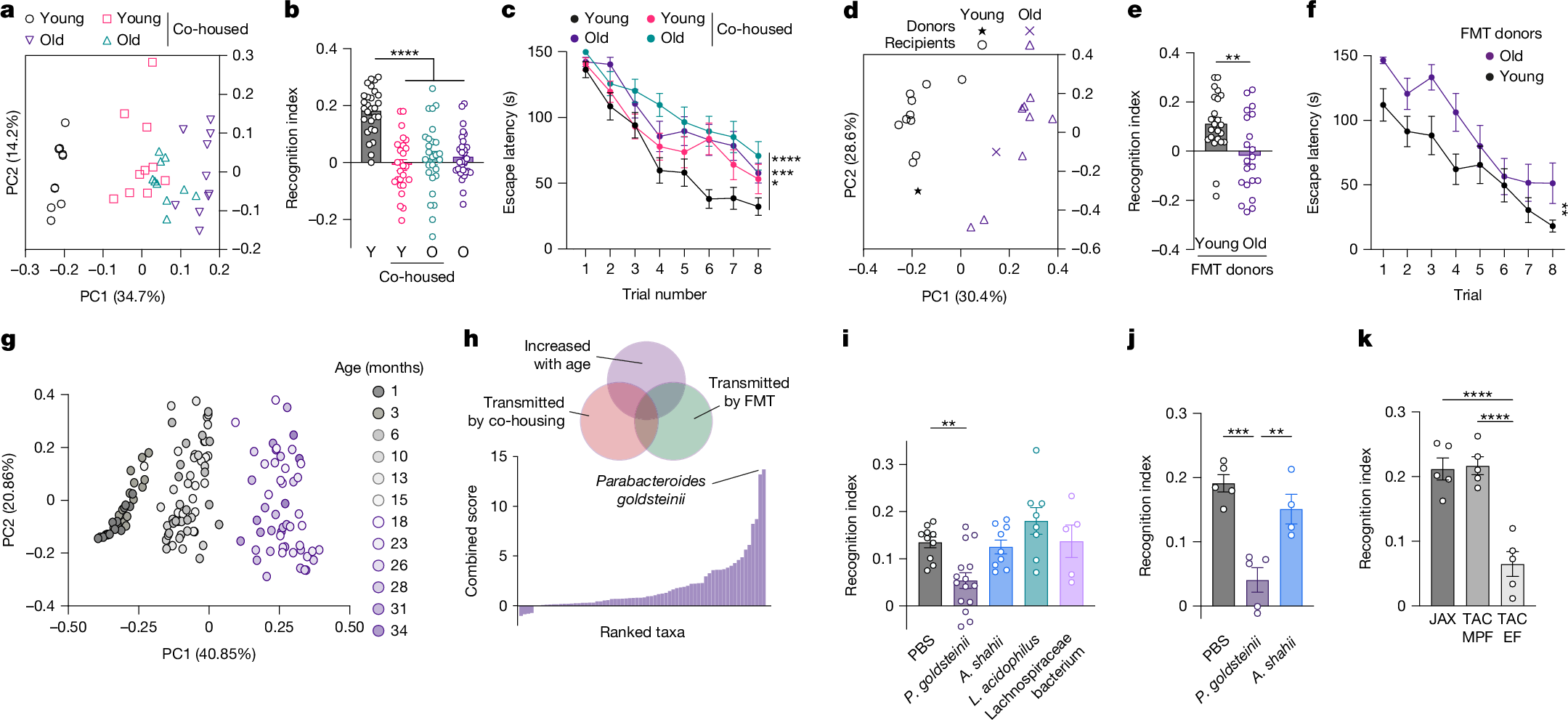
Ageing is accompanied by declining memory function, with extremely heterogeneous manifestation in the human population1. Brain-extrinsic factors influencing cognitive decline, such as gastrointestinal signals, have emerged as attractive targets for peripheral interventions2,3,4,5,6, but the underlying mechanisms remain largely unclear. Here, by charting a high-resolution map of microbiome ageing and its functional consequences throughout the lifespan of mice, we identify a mechanism by which inhibition of gut–brain signalling during ageing results in impaired neuronal activation in the hippocampus and loss of memory encoding. Specifically, accumulation of gut bacteria that produce medium-chain fatty acids, such as Parabacteroides goldsteinii, can drive peripheral myeloid cell inflammation through GPR84 signalling. As a result, the function of vagal afferent neurons is impaired, the interoceptive signal received by the brain is weakened and hippocampal function declines. We leverage this pathway to define interventions that enhance memory in aged mice, such as phage targeting of Parabacteroides, GPR84 inhibition and restoration of vagal activity. These findings indicate a key role for interoceptive dysfunction in brain ageing and suggest that interoceptomimetics that stimulate gut–brain communication may counteract age-associated cognitive decline.