2026-03-25 日本大学
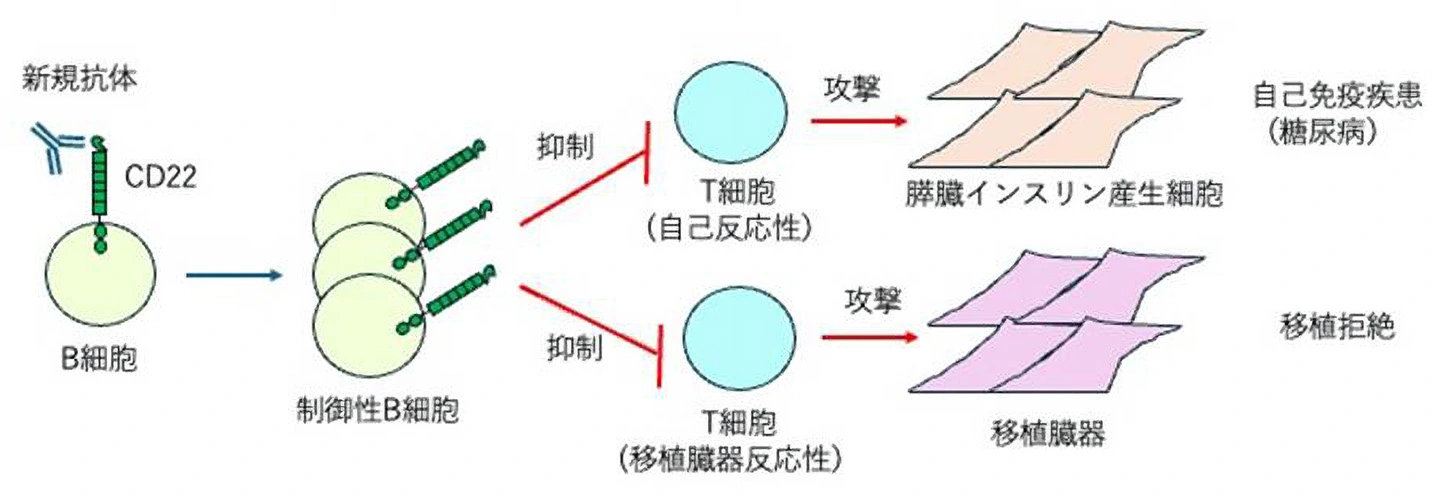
図. B細胞の表面分子CD22に結合し、特殊な活性を発揮する抗体を樹立した。
<関連情報>
- https://digitalpr.jp/r/131390
- https://journals.plos.org/plosbiology/article?id=10.1371/journal.pbio.3003681
CD22-シスリガンド相互作用の阻害は、制御性B細胞を増殖させることにより、1型糖尿病および移植片拒絶反応を改善する Disrupting CD22-cis-ligand interactions ameliorates type 1 diabetes and graft rejection by expanding regulatory B cells
Wang Long,Ayaka Endo,Hashadi Nadeesha Walakulu Gamage,Tianyi Yang,Toru Suzuki,Takeshi Nitta,Hiromu Takematsu,Kenya Honda,Masatake Asano ,Takeshi Tsubata
PLOS Biology Published: March 24, 2026
DOI:https://doi.org/10.1371/journal.pbio.3003681
Abstract
CD22 is an inhibitory receptor expressed in B cells and is constitutively associated with α2,6-sialylated membrane proteins expressed on the same cell (cis-ligands). However, interaction with cis-ligands is required for the function of CD22 only in part. To address the role of ligand interaction of CD22 in immune responses, here we generated anti-CD22 antibody 1C5 that specifically inhibits ligand binding of CD22. Both Cd22−/− mice and mice treated with 1C5 show expansion of regulatory B (Breg) cells in follicular (FO) B cells, suggesting a crucial role of ligand interaction of CD22 in inhibiting the expansion of FO Breg cells. CD22 appears to recognize BCR and TLRs thereby directly or indirectly suppressing TLR signaling essential for expansion of Breg cells. Treatment of mice with 1C5 ameliorates skin graft rejection and type 1 diabetes with expansion of regulatory γδ T cells probably through expansion of Breg cells, suggesting ligand interaction of CD22 as a novel target of therapy for autoimmune diseases and graft rejection.