2026-04-09 テキサス大学オースチン校(UT Austin)
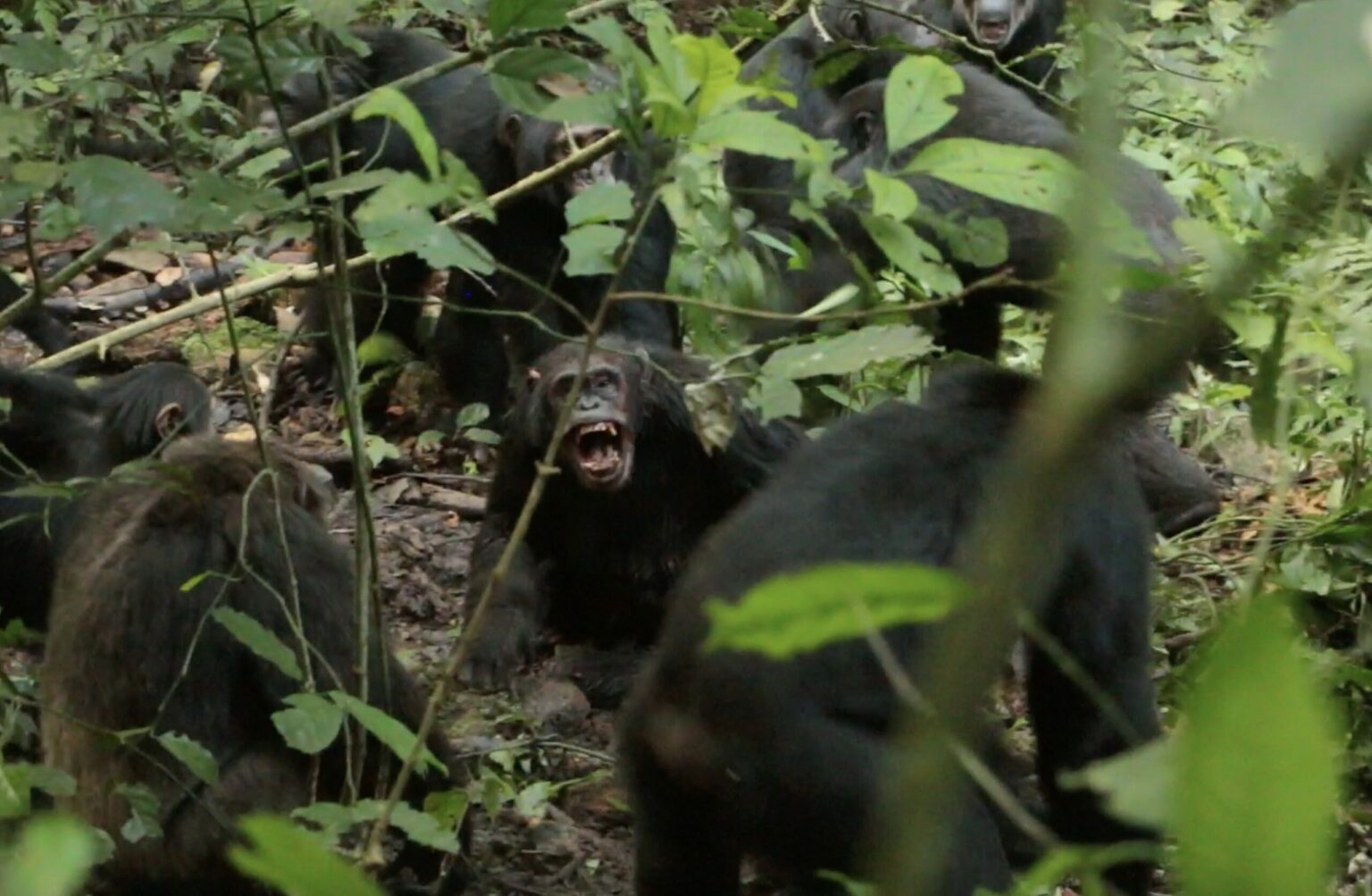
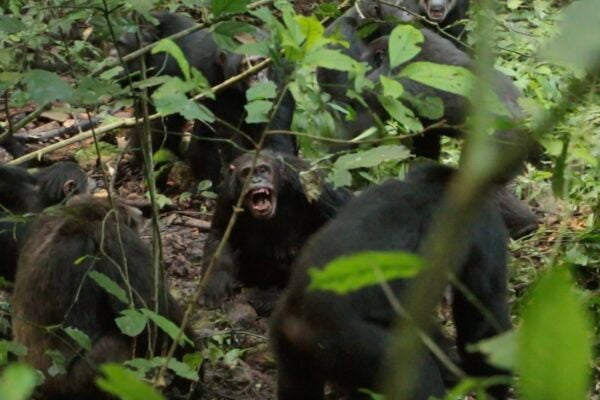
Chimpanzees from the Western group attack members of the Central group in 2019. Photo by Aaron Sandel.
<関連情報>
- https://news.utexas.edu/2026/04/09/first-clearly-documented-split-in-worlds-largest-known-chimpanzee-community-leads-to-deadly-violence/
- https://www.science.org/doi/10.1126/science.adz4944
野生チンパンジーの集団分裂後に発生した致命的な衝突 Lethal conflict after group fission in wild chimpanzees
Aaron A. Sandel, Yixuan He, Junpeng Ren, Yik Lun Kei, […] , and John C. Mitani
Science Published:9 Apr 2026
DOI:https://doi.org/10.1126/science.adz4944
Editor’s summary
Group conflict among nonhuman animals from mongooses to monkeys is well known. However, lethal conflict among groups of animals that were once socially affiliated has not previously been observed outside of humans, in whom cultural ideologies can drive divisions among individuals within the same group. Sandel et al. now describe the gradual dissipation of a group of Ngogo chimpanzees over many years, ending with two socially isolated groups, one of which conducted multiple lethal raids upon the other, leading to the death of both adults and infants (see the Perspective by Brooks). The unrelated deaths of key interconnected individuals may have contributed to the eventually violent split. —Sacha Vignieri
Abstract
Territorial conflicts in animals can inform aspects of human warfare, but civil war, with its shifting group identities, has not been previously observed. We report a rare, permanent fission in the largest-known group of wild chimpanzees (Pan troglodytes). Using 30 years of behavioral observations and network analyses, we describe a transition from cohesion to polarization in 2015 and the emergence of two distinct groups by 2018. Over the next 7 years, members of one group made 24 attacks, killing at least seven mature males and 17 infants in the other group. These findings indicate that group identities can shift and escalate into lethal hostility in one of our closest living relatives in the absence of the cultural markers often thought necessary for human warfare.