2026-05-22 ミュンヘン大学(LMU)
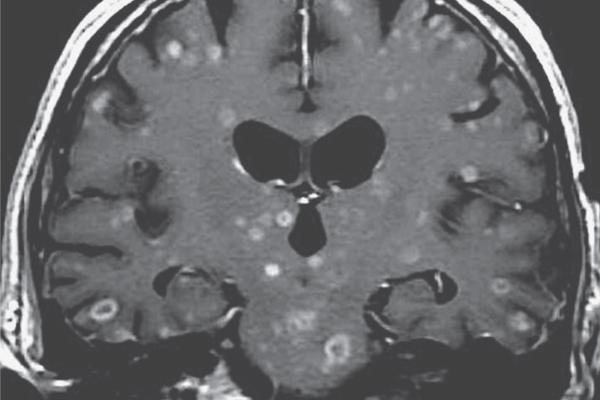
Radiological images such as CT and MRI scans were at the heart of the study. This MRI image of a skull shows diffuse contrast-enhancing lesions in the brain. It is the job of radiologists to correctly classify these as, for example, inflammation, a tumor, or multiple sclerosis. With the right clinical questions, AI can provide support in reaching a diagnosis© NEJM
<関連情報>
- https://www.lmu.de/en/newsroom/news-overview/news/medical-diagnoses-how-ai-explanations-help-doctors-1e3f14f0.html
- https://www.nature.com/articles/s41746-026-02619-0
大規模言語モデルによる医学的説明が放射線診断の精度に及ぼす影響 The effect of medical explanations from large language models on diagnostic accuracy in radiology
Philipp Spitzer,Daniel Hendriks,Jan Rudolph,Sarah Schlaeger,Jens Ricke,Niklas Kühl,Boj Friedrich Hoppe & Stefan Feuerriegel
npj Digital Medicine Published:23 April 2026
DOI:https://doi.org/10.1038/s41746-026-02619-0
Abstract
Large language models (LLMs) are increasingly used by physicians for diagnostic support. A key advantage of LLMs is the ability to generate explanations that can help physicians understand the reasoning behind a diagnosis. However, the best-suited format for LLM-generated explanations remains unclear. In this large-scale study, we examined the effect of different formats for LLM explanations on clinical decision-making. For this, we conducted a randomized experiment with radiologists reviewing patient cases with radiological images (N = 2020 assessments). Participants received either no LLM support (control group) or were supported by one of three LLM-generated explanations: (1) a standard output providing the diagnosis without explanation; (2) a differential diagnosis comparing multiple possible diagnoses; or (3) a chain-of-thought explanation offering a detailed reasoning process for the diagnosis. We find that the format of explanations significantly influences diagnostic accuracy. The chain-of-thought explanations yielded the best performance, improving the diagnostic accuracy by 12.2% compared to the control condition without LLM support (P = 0.001). The chain-of-thought explanations are also superior to the standard output without explanation ( + 7.2%; P = 0.040) and the differential diagnosis format ( + 9.7%; P = 0.004). We further assessed the robustness of these findings across case difficulty and different physician backgrounds, such as general vs. specialized radiologists. Evidently, in the controlled setting of our vignette study, explaining the reasoning for a diagnosis helps physicians to identify and correct potential errors in LLM predictions and thus improve overall decisions. Altogether, the results highlight the importance of explanations in medical LLMs to support the reasoning processes of physicians, so that medical LLMs can improve diagnostic performance and, ultimately, patient outcomes.