2026-07-10 東北大学
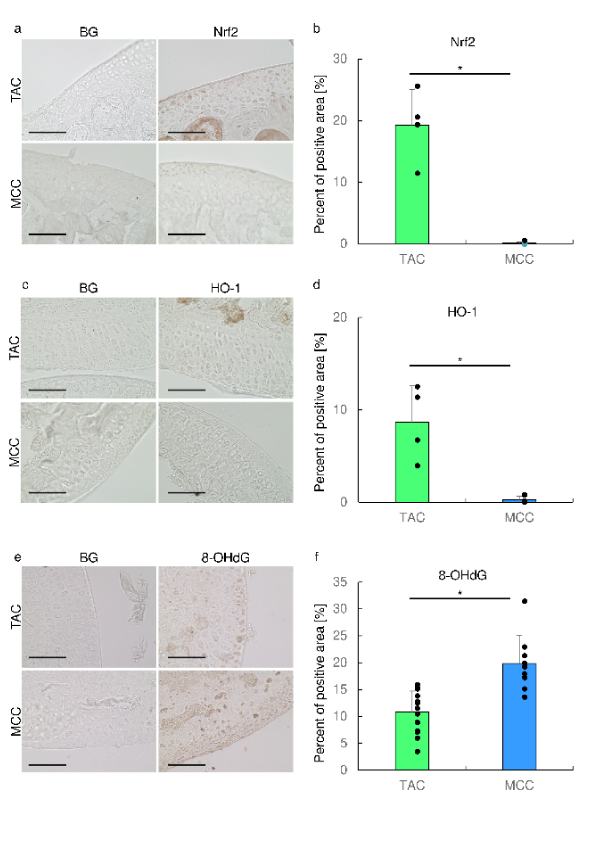
図1. 下顎頭軟骨(顎関節:MCC)と脛骨関節軟骨(TAC)におけるNrf2および抗酸化酵素の発現の比較。
<関連情報>
- https://www.tohoku.ac.jp/japanese/2026/07/press20260710-04-nrf2.html
- https://www.mdpi.com/2076-3921/15/7/854
マウス下顎頭軟骨におけるプロモーターの高メチル化はNrf2および抗酸化酵素の発現低下と関連する Promoter Hypermethylation Is Associated with Reduced Nrf2 and Antioxidant Enzyme Expression in Mandibular Condylar Cartilage in Mice
Hisano Ujiie,Hiroyuki Kanzaki,Mao Katayama,Tomomi Ida,Syunnosuke Tohyama,Miho Shimoyama,Yuta Katsumata,Chihiro Arai,Misao Ishikawa andHiroshi Tomonari
Antioxidants Published: 6 July 2026
DOI:https://doi.org/10.3390/antiox15070854
Abstract
Mandibular condylar cartilage (MCC) exhibits greater susceptibility to mechanical stress-induced degeneration than tibial articular cartilage (TAC). This study investigated whether differential epigenetic regulation of nuclear factor erythroid 2-related factor 2 (Nrf2), a master regulator of antioxidant responses, is associated with distinct antioxidant capacities between these cartilage types. Cartilage tissues from 5-week-old male ICR mice (n = 16 for gene analyses, n = 8 for protein analyses) were obtained using laser microdissection. Gene and protein expression was analyzed by microarray, real-time RT-PCR, and immunohistochemistry. DNA methylation of the Nrf2 promoter was evaluated using pyrosequencing and high-resolution melting analysis. Nrf2 expression in MCC was approximately 1/10 that in TAC at mRNA level and only 5% at protein level. Downstream antioxidant enzymes (NQO1, G6PD, HO-1) showed significantly reduced expression in MCC. Oxidative DNA damage marker 8-OHdG was significantly elevated in MCC compared to TAC (20.0% vs. 10.7%, p < 0.05). The Nrf2 promoter region showed higher DNA methylation levels in MCC, confirmed by high-resolution melting analysis. Higher Nrf2 promoter methylation in MCC is associated with reduced antioxidant capacity and elevated oxidative damage. This epigenetic–antioxidant relationship may contribute to MCC’s vulnerability to mechanical stress-induced degeneration and represents a potential therapeutic target for temporomandibular joint disorders.