2026-09-24 北海道大学
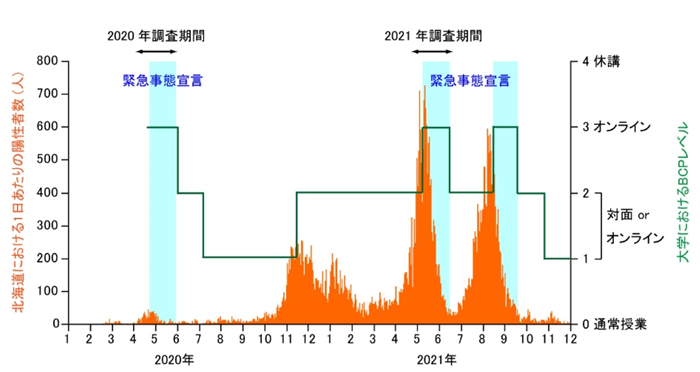
図1. 本調査実施時における北海道内の新型コロナウイルス感染者数の推移
<関連情報>
- https://www.hokudai.ac.jp/news/2026/09/post-2449.html
- https://www.hokudai.ac.jp/news/pdf/260924_pr.pdf
- https://www.jstage.jst.go.jp/article/tjem/advpub/0/advpub_2026.J089/_article
COVID‑19流行初期の北海道における大学生の生活習慣変化と主観的健康感の関連 Associations Between Lifestyle Changes and Self-Rated Health Among Japanese University Students During the COVID-19 Pandemic: Early Evidence from Hokkaido, Where the First Outbreak Occurred in Japan
Noriko Matsuura, Yujiro Yamanaka
The Tohoku Journal of Experimental Medicine Published:September 17, 2026
DOI:https://doi.org/10.1620/tjem.2026.J089
Abstract
The COVID-19 pandemic led to prolonged school closures, disrupting the daily routines of university students and raising concerns about their health and well-being. This study examined changes in lifestyle habits and self-rated health (SRH) among Japanese university students during two closure periods in 2020 and 2021. A total of 678 students completed online surveys, reporting SRH before and during closures, along with changes in sleep, exercise, diet, and mood. Logistic regression analyses identified lifestyle factors associated with SRH deterioration and improvement. The proportion of students reporting good or very good SRH decreased from 52.4% to 39.4%, whereas those reporting bad or very bad SRH increased from 7.2% to 20.1% (both p < .001). Sleep and exercise habits worsened, including delayed bedtimes and wake-up time, longer sleep durations, and reduced physical activity. Breakfast skipping and late-night snacking were also common. SRH deterioration was associated with worsened sleep quality (OR = 5.3), reduced meal frequency (OR = 2.0), and exercise frequency (decreased: OR = 2.0 increased: OR = 0.3). In contrast, SRH improvement was associated with improved sleep quality (OR = 13.8) and increased exercise frequency (OR = 6.7), associations that remained significant after adjustment for mood changes. Although limitations include self-reported data, a cross-sectional design, and sampling from a limited number of institutions, the findings align with international evidence linking lifestyle disruptions and poorer mental health. This study provides timely evidence that maintaining healthy routines could be beneficial for protecting student well-being during public health crises.