2026-04-17 東京大学
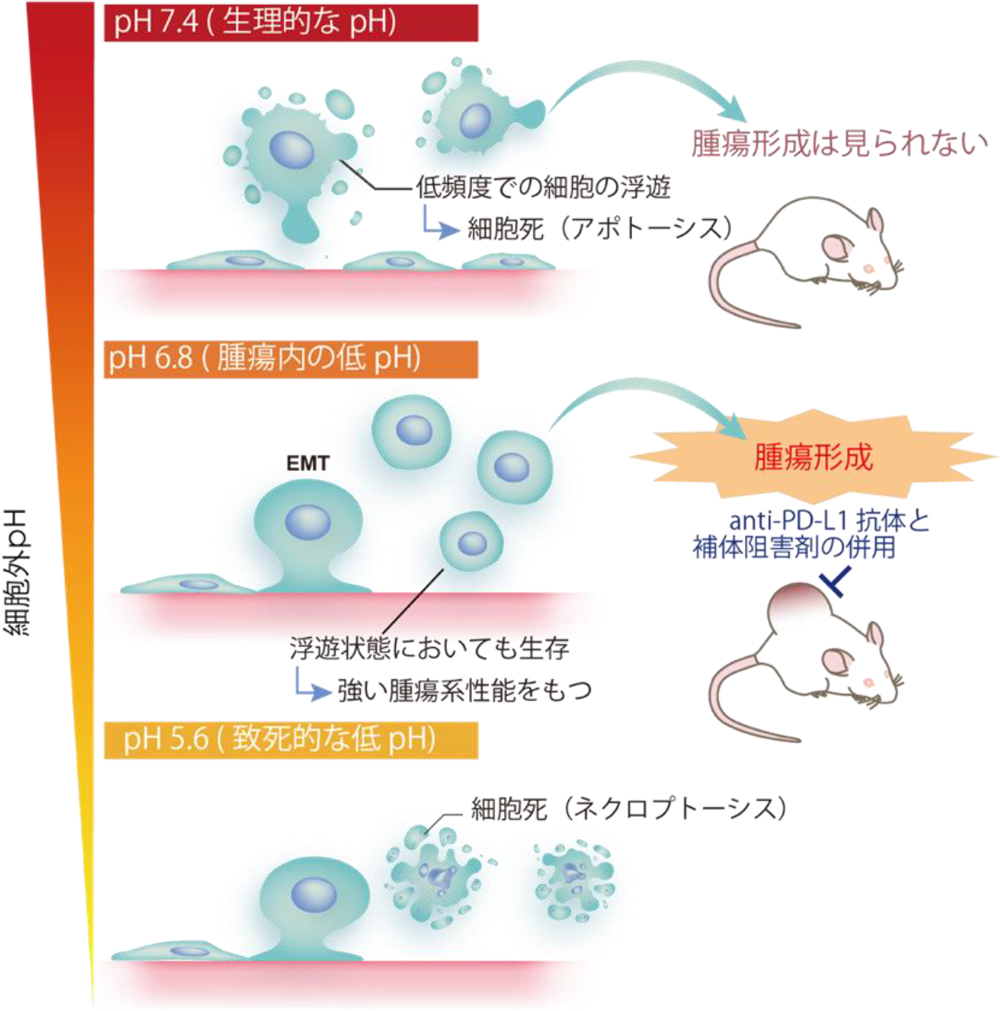
図1 本研究にて解明されたメカニズム
<関連情報>
- https://www.rcast.u-tokyo.ac.jp/ja/news/release/20260417.html
- https://www.cell.com/cell-reports/fulltext/S2211-1247(26)00304-9
細胞外の酸性pHに対する耐性は腫瘍の可塑性を促進する Tolerance to extracellular acidic pH facilitates tumor plasticity
Manami Hasegawa ∙ Bo Xu ∙ Keisuke Maeda ∙ … ∙ Hideyuki Yanai ∙ Nozomu Yachie ∙ Tsuyoshi Osawa
Cell Reports Published:April 16, 2026
DOI:https://doi.org/10.1016/j.celrep.2026.117226
Highlights
- pH 5.6 induces necroptosis, whereas pH 6.8 induces anchorage-independent survival
- Cancer cells at pH 6.8 show enhanced tumor plasticity and tumorigenicity
- Chronic acidic pH promotes protumor immunity via the FAM129C-PIGR-complement axis
- Combination treatment with anti-complement/anti-PD-L1 suppresses acidic pH-adaptive tumors
Summary
Cancer cells sustain glycolysis despite oxygen availability, creating an acidic microenvironment via proton and lactate export, but how they survive acid stress is unclear. We show that severe acidification (pH 5.6) induces necroptosis, whereas moderate acidity (pH 6.8) prevents death and enables anchorage-independent survival and tumor initiation. RNA sequencing of suspended cells at pH 6.8 revealed activation of respiratory chain complex and complement pathways, consistent with adaptation to this pH. A genome-wide CRISPR-Cas9 knockout screen in PANC1 cells under chronic acidity identified FAM129C as a regulator of acid tolerance and survival. In xenografts, FAM129C overexpression reduced PIGR expression, implicating this axis in tumor growth and immune infiltration. Anti-PD-L1 plus a complement inhibitor showed synergistic anti-tumor activity in PIGR-overexpressing tumors. Thus, acidic stress engages a pathway that allows cancer cells to evade necroptosis and promote tumor plasticity, providing potential avenues for therapeutic intervention targeting pH-dependent cell-death pathways.