2026-06-11 インペリアル・カレッジ・ロンドン(ICL)
<関連情報>
- https://www.imperial.ac.uk/news/articles/medicine/infectious-disease/2026/flu-infection-may-leave-people-more-susceptible-to-tuberculosis-infection-study-suggests-/
- https://www.nature.com/articles/s41467-026-72363-2
インフルエンザの同時感染は、ヒト感染モデルにおけるマイコバクテリア感染の制御を阻害する Influenza coinfection inhibits control of mycobacterial infection in a human challenge model
Claire M. Broderick,Oliver Powell,Sam Nichols,Giselle D’Souza,Dominic Habgood-Coote,Carlota Miranda-Sole,Emily M. Whettlock,Zoe Gardener,Emma Bergstrom,Victoria J. Wright,Christopher W. Woods,Christopher Chiu,Sandra M. Newton,Elizabeth Whittaker,Michael Levin & Myrsini Kaforou
Nature Communications Published:11 June 2026
DOI:https://doi.org/10.1038/s41467-026-72363-2
Abstract
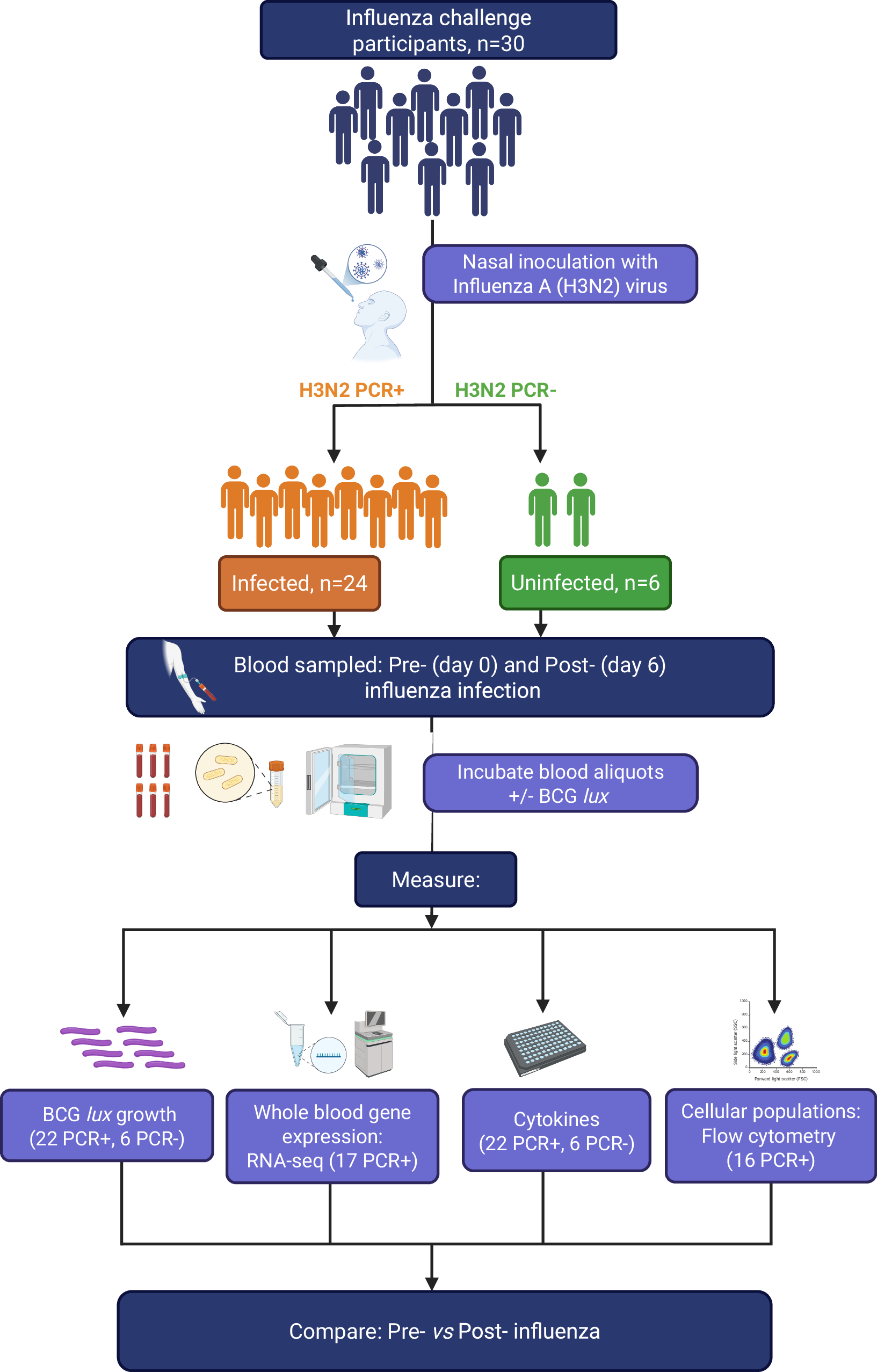
Mycobacterium tuberculosis infection is a dynamic continuum. Clinical outcomes reflect complex host-pathogen interactions. Epidemiological and animal studies have suggested influenza coinfection as a risk factor for progression from contained infection to active disease, but human studies have been lacking. Using a whole blood luminescent mycobacterial growth inhibition assay within a human influenza challenge study, we show that influenza infection reduces immunological control of mycobacterial growth. Transcriptome-wide RNA sequencing, cytokine and cellular analyses of subjects’ blood before and after influenza infection reveal that innate immune pathways, including type 1 interferon signalling, are activated by influenza but their subsequent responsiveness to mycobacteria is reduced, with multiple genes’ responses to BCG lux infection repressed by influenza coinfection. Our data suggest that influenza infection impairs immune mechanisms that contain mycobacterial growth and may be a risk factor for tuberculosis (TB) disease. Influenza vaccination might offer high risk, high prevalence populations protection against TB disease.