2026-06-23 アリゾナ大学
<関連情報>
- https://news.arizona.edu/news/power-genome-scientists-decipher-how-nucleus-gets-its-energy
- https://www.nature.com/articles/s41586-026-10588-3
ミトコンドリアは核膜孔複合体と直接相互作用する Mitochondria directly interact with the nuclear pore complex
Ivan Menendez-Montes,Consuelo Marin-Vicente,Shibani Mukherjee,Mahmoud Salama Ahmed,Manuel Jose Gomez,Chukwuemeka George Anene-Nzelu,Chang Jie Mick Lee,Svenja Koslowski,Ashley Solmonson,Tara Tassin,Shah R. Ali,Pedro Pessoa,Abdallah Elnwasany,Nicholas T. Lam,Suwannee Thet,Enrique Calvo,Alisson C. Cardoso,Ana Helena M. Pereira,Feng Xiao,Ping Wang,Asim Mohamed,Hamed El-feky,Ahmed Elghamry,Gonzalo Gancedo-Alonso,… Hesham A. Sadek
Nature Published:10 June 2026
DOI:https://doi.org/10.1038/s41586-026-10588-3
Abstract
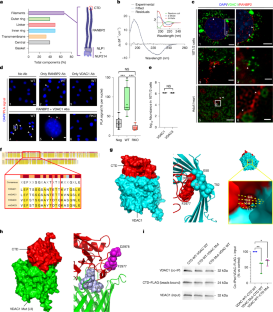
Mitochondria regulate cellular processes through direct and indirect interactions with other organelles. A well-studied example has been contact with the endoplasmic reticulum at mitochondrial-associated endoplasmic reticulum membranes1, which control pathways including redox and calcium homeostasis2,3. Recent studies have also reported direct mitochondria–nuclear membrane contacts in cancer cells and yeast that promote pro-survival signalling4,5. Here we identify direct interactions between mitochondria and nuclear pores. Using two unbiased proteomic screens, GST pulldown and BioID, we found that VDAC1 was the top mitochondrial candidate that interacts with the filamentous nuclear pore protein RANBP2. In vitro RANBP2 CRISPR knockout, RANBP2 truncation or site-directed mutagenesis of RANBP2–VDAC1 interacting amino acids resulted in reduced mitochondria–nucleus proximity and decreased nuclear ATP and phosphocreatine levels. This was accompanied by a decline in the levels of the nuclear phosphoproteome and downregulation of pathways involved in histone modification, cellular differentiation and transcriptional regulation in vitro. Moreover, deletion of the RANBP2 C-terminal domain in vivo in mice resulted in embryonic lethality due to cardiac and neural crest differentiation defects. Collectively, these results describe a mechanism by which mitochondria directly interact with the nuclear pore complex, a phenomenon critical for regulation of nuclear energetics and cellular differentiation. Undoubtedly, additional roles of this interaction remain to be revealed.