2026-09-14 中国科学院(CAS)
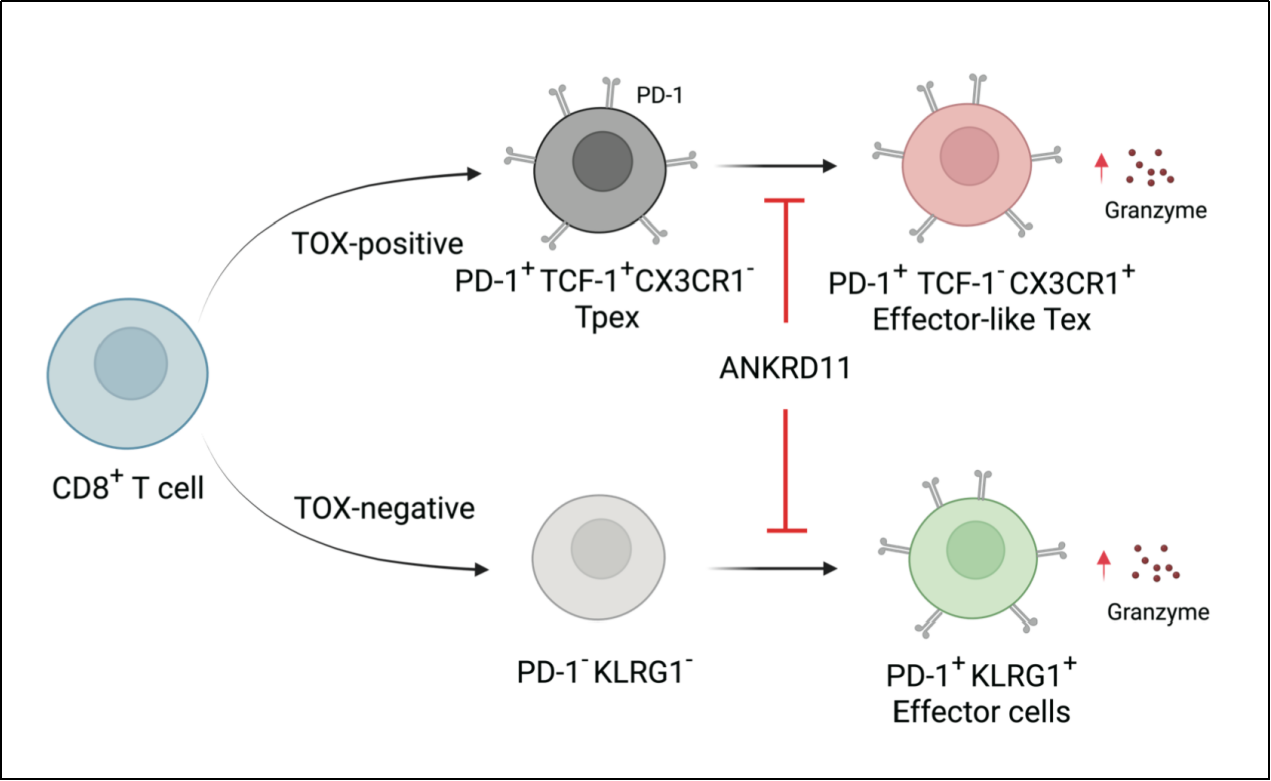
Proposed dynamics of antigen-specific CD8+ T cell populations regulated by Ankrd11 in chronic infection and cancer (Image by Prof. ZHOU Xuyu’s group)
<関連情報>
- https://english.cas.cn/newsroom/research-news/202609/t20260911_1197743.shtml
- https://www.nature.com/articles/s41590-026-02652-x
ANKRD11欠損はCD8 + T細胞の分化を再プログラムし、慢性感染症および癌における免疫を増強する ANKRD11 deficiency reprograms CD8+ T cell differentiation to enhance immunity in chronic infection and cancer
Wei Xu,Jie Guo,Xue Cao,Liping Li,Pei Xiao,Xinchao Zhang,Qiuzhu Jin,Fuping Zhang,Baidong Hou,Minghui Li & Xuyu Zhou
Nature Immunology Published:11 September 2026
DOI:https://doi.org/10.1038/s41590-026-02652-x
Abstract
CD8+ T cell dysfunction is a major obstacle to hepatitis B virus (HBV) clearance and antitumor immunity. Here, using a humanized mouse model, we identify a T cell receptor targeting a clinically relevant HBV epitope and reveal ANKRD11 as a key epigenetic regulator of CD8+ T cell dysfunction in chronic infection and tumors. Ankrd11 knockout in CD8+ T cells enhances HBV-specific T cell proliferation and effector differentiation, especially under immunosuppressive conditions, via AP-1 family gene upregulation. Loss of Ankrd11 both drives the conversion of progenitor exhausted T cells into terminally exhausted T cells, and reprograms PD-1−TOX− tolerant cells into functional effectors, improving antiviral and antitumor responses. Ankrd11-deficient T cells show increased granzyme and superior effector function, enhancing viral control and tumor regression. These findings position ANKRD11 as a promising immunotherapy target for chronic HBV infection and cancer.