2026-09-23 中国科学院(CAS)
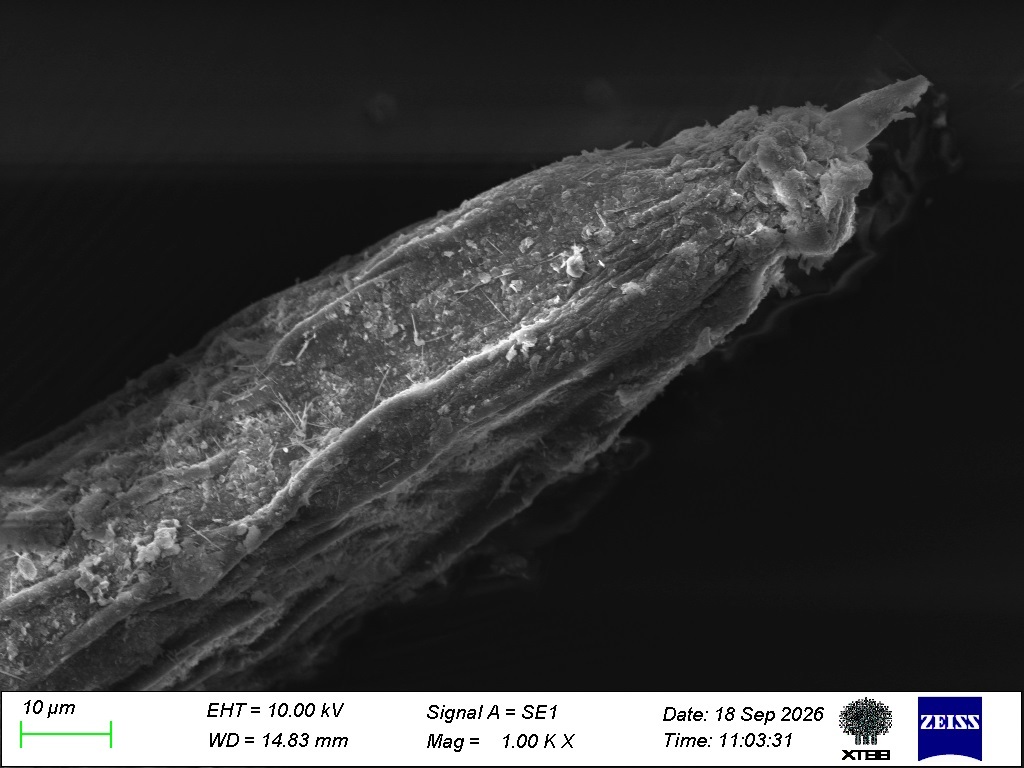
Soil nematode (Image by TANG Ting)
<関連情報>
- https://english.cas.cn/newsroom/research-news/202609/t20260923_1201141.shtml
- https://www.pnas.org/doi/10.1073/pnas.2523958123
土壌線虫の多様性は、植生の変化と形質を介した分散制限によって構造化されている Soil nematode diversity is structured by vegetation turnover and trait-mediated dispersal limitation
Wenting Wang, Shangwen Xia, Haifeng Xiao, +9 , and Xiaodong Yang
Proceedings of the National Academy of Sciences Published:September 22, 2026
DOI:https://doi.org/10.1073/pnas.2523958123
Abstract
Soils support substantial biodiversity that is crucial for ecosystem functioning. Nematodes represent one of the most abundant and diverse groups of soil metazoans, playing essential roles in soil food webs and various ecosystem functions. However, the scale-dependent factors associated with their diversity remain poorly understood. In this study, we aimed to examine the factors associated with soil nematode α-, β-, and γ-diversity across multiple spatial scales and elucidate nematode community assembly processes. We assessed soil nematode communities in 691 soil samples from seven primary forest plots (400 m × 400 m) along a montane forest transect (Tibetan Plateau—Hengduan Mountains—Tropical Lowland) using a nested sampling design with a 40-m grid as the smallest sampling unit. Plant diversity, soil properties, elevation, and litter biomass were measured to characterize local spatial heterogeneity, and nematode functional traits (body length and body width) were quantified at the genus level. The results showed that 1) nematode α- and γ-diversity were significantly and positively associated with plant β-diversity; 2) nematode β-diversity did not covary with the regional genus pool (γ-diversity) and was primarily shaped by local community assembly, dominated by body width-dependent dispersal limitation; and 3) environmental heterogeneity further contributed to β-diversity in bacterivorous, fungivorous, omnivorous, and total nematode communities. The findings highlight the importance of conserving plant community dissimilarity in the context of global plant community homogenization because it is associated with greater soil nematode diversity. Overall, this study demonstrates the importance of functional traits in structuring belowground communities through trait-based community assembly processes.