2026-11-09 カロリンスカ研究所(KI)
<関連情報>
- https://news.ki.se/two-newly-identified-protein-forms-may-play-a-role-in-alzheimers
- https://www.nature.com/articles/s41467-026-79028-0
機能的に異なる2つのアミロイドβ中間体が、凝集経路とアルツハイマー病の病理を結びつける Two functionally distinct amyloid-β intermediates link aggregation pathways to pathology in Alzheimer’s disease
Agnieszka Urbanek, Alexander J. Dear, David P. Rhodes, Emma F. Garland, Hollie E. Wareing, Harry J. Baker, Willem Molenkamp, Ruixin Zhang, Gefei Chen, Axel Abelein, Simon M. Bell, Juan A. Varela, Thomas C. T. Michaels, J. Robin Highley, Georg Meisl, Jan Johansson & Suman De
Nature Communications Published:09 November 2026
DOI:https://doi.org/10.1038/s41467-026-79028-0
Abstract
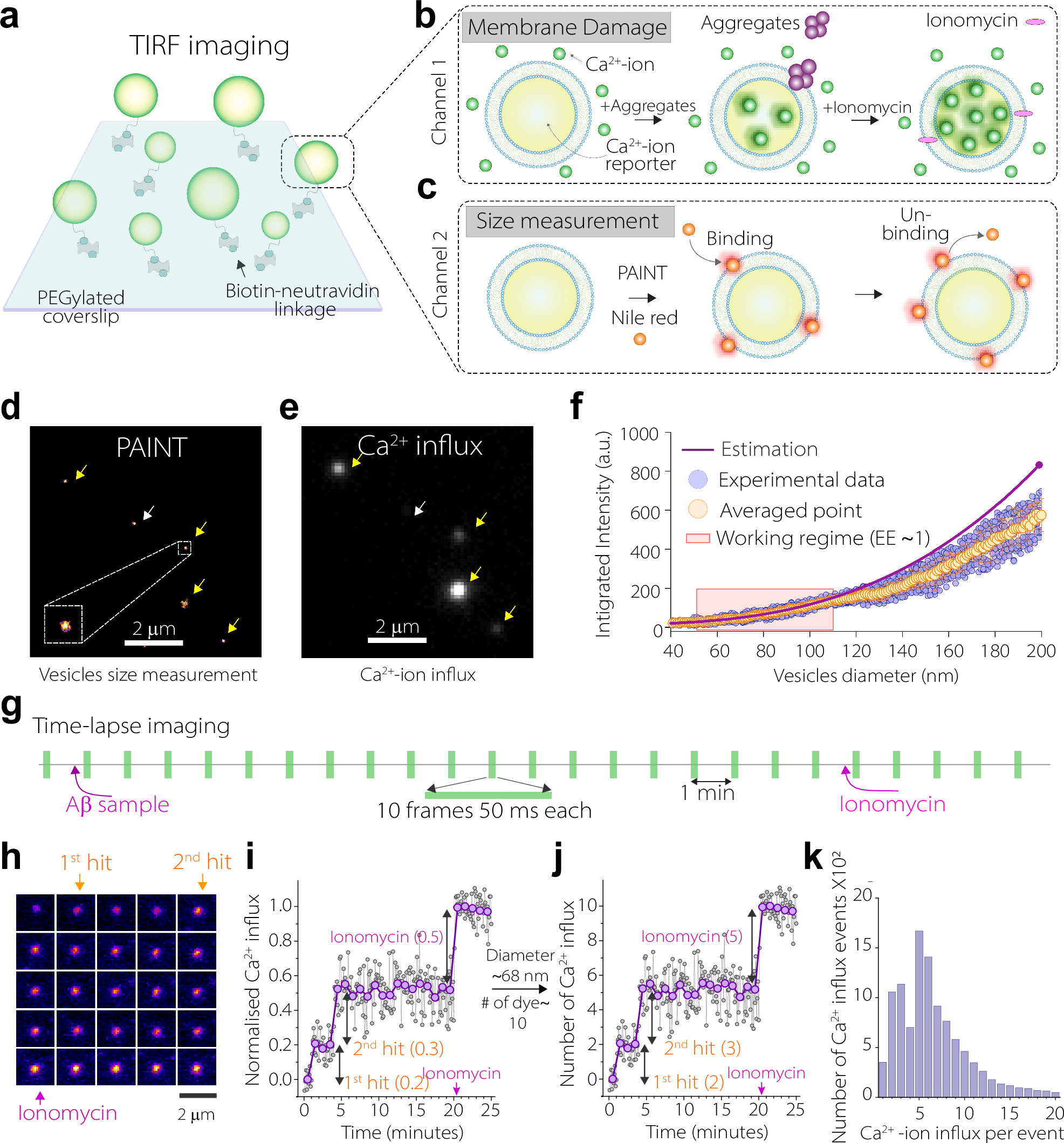
Neurotoxic intermediates formed during amyloid-β (Aβ) aggregation are thought to drive Alzheimer’s disease, yet their rarity and transient nature have obscured their identity and formation pathways in the human brain. Here, we combine super-resolution microscopy and single-molecule functional imaging with kinetic modelling to classify Aβ intermediates according to their membrane-disrupting activity and connect their damaging effects to the aggregation pathways that generate them. Applying this framework to recombinant Aβ42, an Alzheimer’s knock-in mouse model and human Alzheimer’s brain tissue, we find two functionally distinct intermediate populations present across all systems. They form through separate aggregation routes and differ in their neurotoxicity, abundance and susceptibility to inhibition. Both damage neurons and glia, but only one converts into plaques. Suppressing these intermediates pharmacologically in mice reduces plaque burden, attenuates astrogliosis and improves cognition. Our findings connect model systems with human pathology and identify intermediate formation pathways as actionable therapeutic targets across protein-misfolding disorders.