2025-10-16 テキサス大学オースチン校(UT Austin)
<関連情報>
- https://news.utexas.edu/2025/10/16/leading-the-future-right-from-the-start-dell-med-students-publish-pediatric-brain-tumor-research/
- https://academic.oup.com/noa/article/7/1/vdaf193/8246364
小児神経膠腫における腫瘍微小環境の標的化:免疫療法の進歩と将来の方向性 Targeting the tumor microenvironment in pediatric gliomas: Advances and future directions in immunotherapy
Cheyenne Ahamed, Lam Nguyen, Cayley S Brock, Ayla Farzamnia, Pierrick Millet, Keisaku Sato, Kevin K Kumar
Neuro-Oncology Advances Published:01 September 2025
DOI:https://doi.org/10.1093/noajnl/vdaf193
Abstract
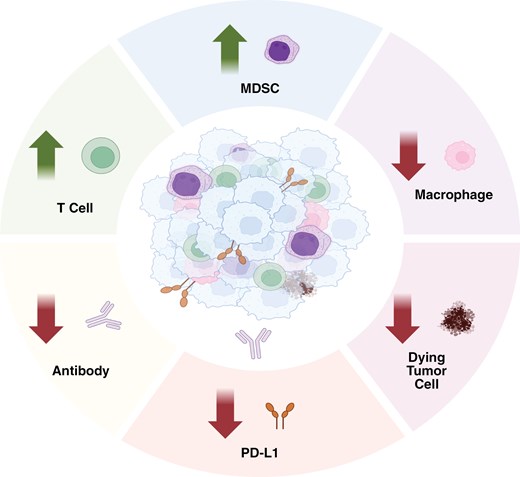
The tumor microenvironment (TME) is a critical determinant of tumor progression and therapeutic response in gliomas. While pediatric gliomas have historically been treated using strategies derived from the management of adult gliomas, emerging evidence reveals that pediatric gliomas possess a unique TME. The pediatric TME is distinct, characterized not only by differences in cellular composition but a lower mutational burden, diminished neoantigen presentation, and heightened immunosuppressive activity. The unique immune landscape, developmental trajectories, and immune escape mechanisms in the pediatric TME create barriers to effective therapy. Recent studies show promising results in novel and advanced therapeutic strategies, highlighting the potential for innovative immunotherapeutic approaches. Advances in methodologies for modeling the TME, including computational approaches and animal-based models, provide new insights into pediatric glioma biology. Utilization of computational models may provide opportunities to predict tumor response to specific therapies and tailor immunotherapy regimes to individuals, allowing for personalized care. Leveraging the unique features of the pediatric TME offers an opportunity to overcome current barriers to immunotherapy and develop more effective, age- and tumor-specific treatment strategies.