2026-05-19 東京科学大学
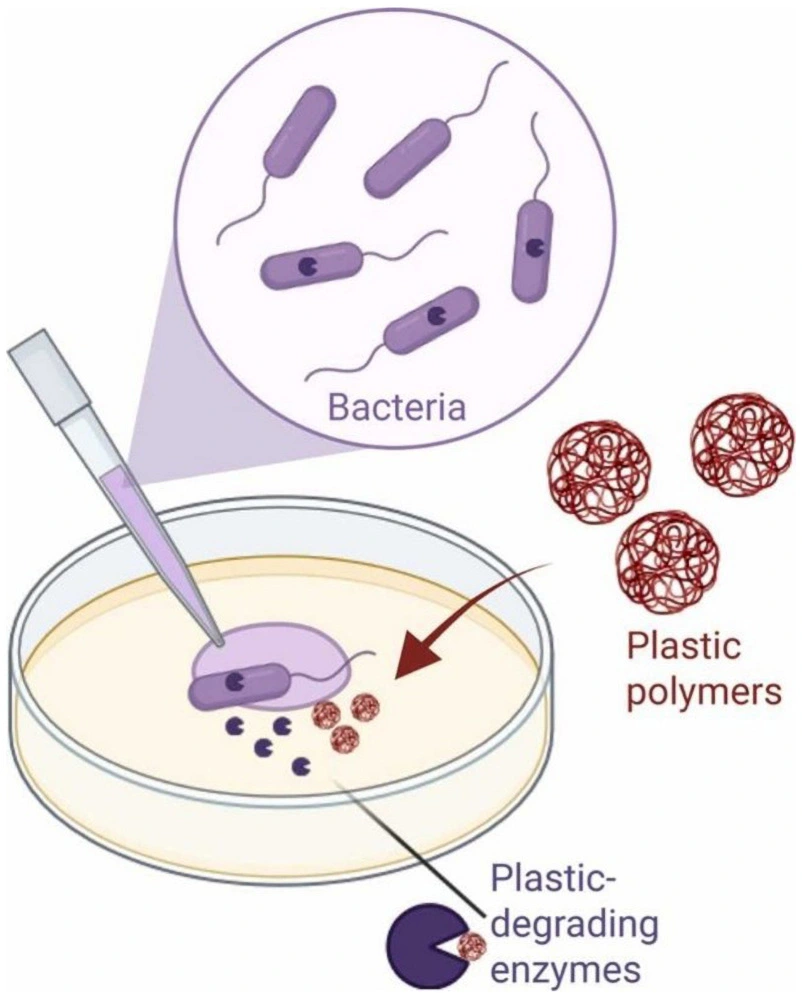
図. 細菌が産生する酵素によってプラスチックポリマーが分解される過程を示した模式図。
<関連情報>
- https://www.isct.ac.jp/ja/news/zycl3iikzmxu
- https://www.sciencedirect.com/science/article/pii/S235218642600129X
相同遺伝子群のプラスチック分解クラスターは、原核生物におけるほぼ普遍的な生分解能力を明らかにしている Plastic-degrading clusters of orthologous groups reveal near-universal biodegradation potential in prokaryotes
Shakira Mustari, Loan Tú Phạm, Kari Saikkonen, Miho Nakamura, Pere Puigbò
Environmental Technology & Innovation Available online: 15 March 2026
DOI:https://doi.org/10.1016/j.eti.2026.104872
Abstract
Micro- and nanoplastic pollution (MNPP) is an increasing environmental threat due to the persistence, dispersal, and potential toxicity of plastic particles. Although microbial biodegradation offers a sustainable mitigation strategy, a comprehensive understanding of plastic-degrading proteins across microbial taxa is lacking. Here, we present the Plastic-Degrading Clusters of Orthologous Groups (PDCOGs) database (https://phylobone.com/microworld/PDCOG), comprising 625,616 potential plastic-degrading proteins (PPDPs) from free-living prokaryotes organized into 51 orthologous groups. The database/PDCOGs enable systematic analysis of microbial plastic-degrading capacity across ecosystems and phylogenetic lineages. Notably, PPDPs constitute ∼3.5% of all prokaryotic proteins, with over 95% of the species having the potential to biodegrade at least one plastic polymer type. This resource provides a genomic tool/framework for exploring the ecological and evolutionary importance of plastic biodegradation and supports future efforts to mitigate the global MNPP crisis.