2026-06-12 カリフォルニア大学リバーサイド校(UCR)
米国カリフォルニア大学リバーサイド校(UCR)の研究チームは、脳損傷後に免疫系が過剰に活性化することで、神経障害を悪化させる仕組みを解明した。研究では外傷性脳損傷後のマウスモデルを用いて解析を行い、損傷部位で活性化した免疫細胞が炎症反応を増幅させ、神経細胞の損傷や機能障害を長期化させることを明らかにした。特に、脳内の免疫細胞であるミクログリアや末梢から侵入する免疫細胞が放出する炎症性分子が、神経回路の修復を妨げ、認知機能や運動機能の回復を阻害することが示された。
◆さらに研究チームは、特定の免疫シグナル経路を抑制することで炎症を軽減でき、神経組織の損傷や行動異常が改善することを確認した。これらの結果は、脳損傷そのものだけでなく、その後に生じる免疫反応が予後を左右する重要な要因であることを示している。従来の治療は損傷直後の対応が中心だったが、本研究は免疫応答を標的とした新たな治療戦略の可能性を提示した。
◆研究者らは、外傷性脳損傷や脳卒中などの患者に対して、過剰な炎症を抑制しながら正常な修復機構を維持する治療法の開発につながる成果であるとしており、将来的な神経保護療法の進展が期待される。

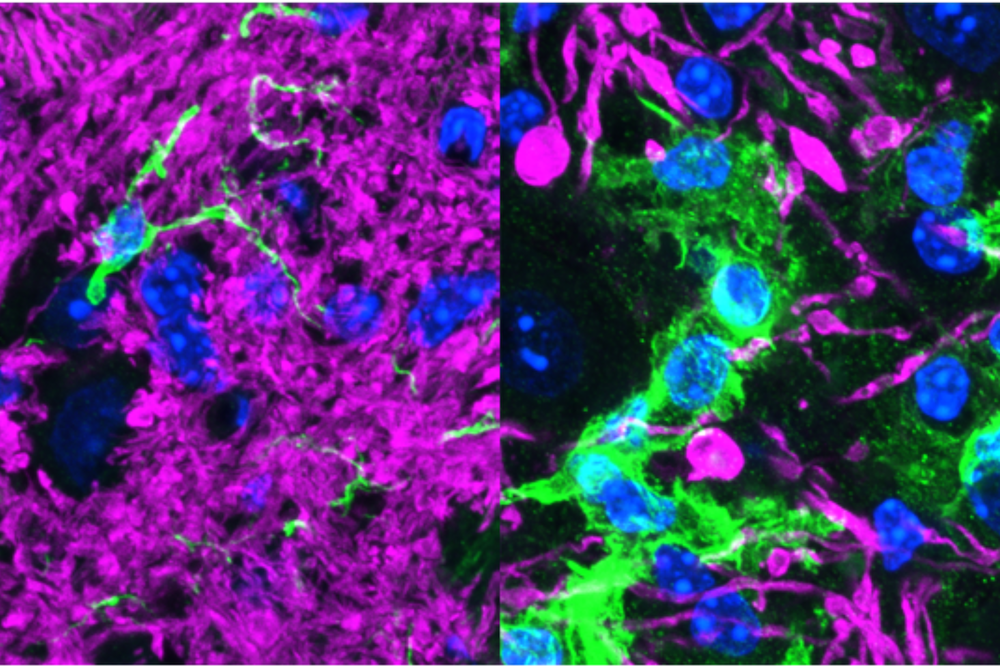
Header image, an AI-generated illustration, shows how brain injury (the shock wave from the left to the brain) leads to the breaking of neuronal connections/neuronal communication. Credit: Deepak Subramanian, UC Riverside.
<関連情報>
- https://news.ucr.edu/articles/2026/06/12/how-immune-system-worsens-brain-injury-outcomes
- https://link.springer.com/article/10.1186/s12974-026-03890-4
神経細胞のトール様受容体4によるマトリックスメタロプロテイナーゼ9活性の調節は、外傷性脳損傷後の歯状回回路機能障害を媒介する Neuronal toll-like receptor-4 regulation of matrix metalloproteinase-9 activity mediates dentate circuit dysfunction after traumatic brain injury
Deepak Subramanian,Erick M Contreras,Laura Dovek,Razieh Jaberi,Emmanuel Green,Ysabelle K Lao,Iryna M Ethell & Vijayalakshmi Santhakumar
Journal of Neuroinflammation Published:03 June 2026
DOI:https://doi.org/10.1186/s12974-026-03890-4 Unedited version
Abstract
Neuroinflammatory pathways activated by traumatic brain injury (TBI) are critical mediators of long-term neurological dysfunction and represent promising therapeutic targets. Toll-like receptor 4 (TLR4), an innate immune receptor, was previously shown to contribute to increased seizure susceptibility and cognitive deficits in rats after lateral fluid percussion injury (FPI). However, the cellular and molecular mechanisms underlying TLR4-mediated circuit dysfunction early after brain injury are not fully understood. In this study, we define a cell- and circuit- specific neuroimmune-enzyme effector signaling axis that mediates early post-TBI circuit dysfunction in the hippocampal Dentate Gyrus (DG). Using ex vivo electrophysiology in rat and mouse models one week after brain injury, we demonstrate that neuronal TLR4 signaling regulates both excitatory and inhibitory synaptic inputs to dentate granule cells (DGC). Collectively, pharmacological inhibition of TLR4 in rats and cell-type-specific deletion of TLR4 in mice show that neuronal TLR4 mediates injury-driven increase in DGC excitatory input frequency and relies on downstream activation of Matrix Metalloproteinase-9 (MMP-9). In contrast, TLR4 signaling contributed to a decrease in inhibitory current frequency after injury, but independent of MMP-9, revealing a mechanistic divergence. Systemic inhibition of either TLR4 signaling or MMP-9 activity in rats within 24 h after injury reduced network hyperexcitability and improved long-term potentiation (LTP) in the DG measured in vivo one week after injury. Either TLR4 or MMP-9 inhibition early after injury effectively attenuated spatial memory deficits in a Barnes maze task one month post-injury. Paradoxically, in sham controls, inhibition of TLR4 increased the frequency of both excitatory and inhibitory inputs to DGCs and augmented network excitability, without altering MMP-9 levels, identifying context-dependent roles for TLR4 signaling. Together, these results identify a novel TLR4 -MMP-9 axis as a key driver of early post-TBI dentate gyrus circuit dysfunction and behavioral deficits.