2026-07-28 コペンハーゲン大学(UCPH)
<関連情報>
- https://news.ku.dk/all_news/2026/07/cancer-patients-are-far-more-likely-to-develop-mental-disorder-diagnoses/
- https://www.nature.com/articles/s41416-026-03460-8
がん治療後に発症する精神疾患:デンマークにおける30年間にわたる全国規模の住民ベースコホート研究における実世界の精神医学的転帰の分析 Incident mental disorders following cancer: analysis of real-world psychiatric outcomes in a nationwide population-based cohort study in Denmark across three decades
Franziska Springer,Mette Kielsholm Thomsen,Jorne Biccler,Lars Vedel Kessing,Anja Mehnert-Theuerkauf,Annika von Heymann & Christoffer Johansen
British Journal of Cancer Published:29 April 2026
DOI:https://doi.org/10.1038/s41416-026-03460-8
Abstract
Background
Cancer and mental disorders may influence one another, yet research on the risk of developing a new-onset mental disorder following cancer, other than depression, remains limited.
Methods:
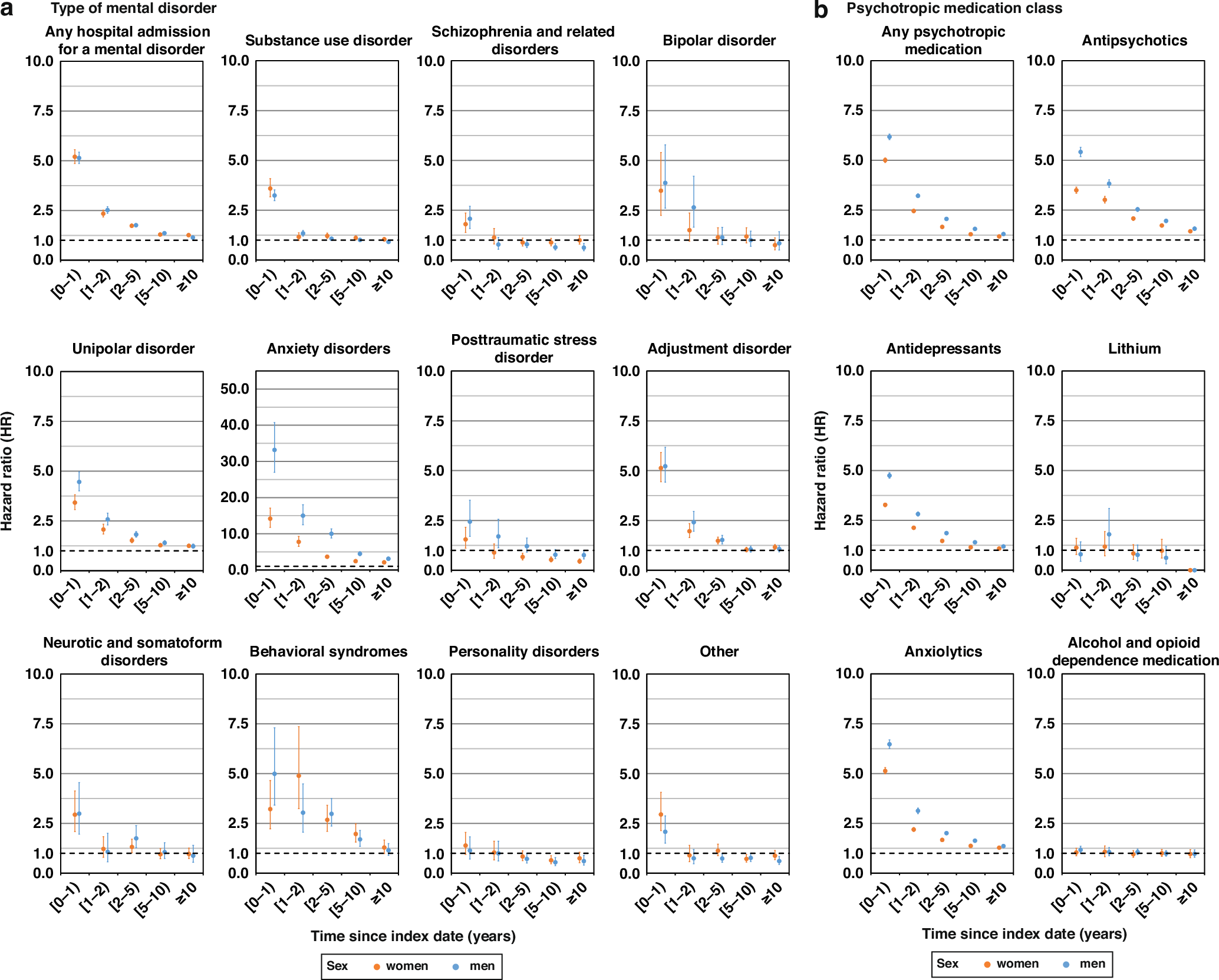
In a nationwide register-based study, patients were followed from incident cancer diagnosis between 1995 and 2015 until end of follow-up 2023, excluding those with preexisting mental disorders. Patients were matched with cancer-free individuals on age, sex, socioeconomic position and comorbidities. We estimated incidence rates (IR) of mental disorders through psychiatric diagnoses and psychotropic medication prescriptions, as well as hazard ratios (HR) in comparison to cancer-free individuals.
Results
We included 289,391 cancer patients and 1,031,057 population-matched cancer-free comparisons. Across the cancer cohort, 116,118 developed any incident mental disorder, with a HR of 2.3 [95%-CI: 2.3–2.3] and varying rates across tumor types. IR and HR were highest in the first year after cancer diagnosis and decreased rapidly thereafter, yet the HR remained elevated exceeding ten years. Highest IRs and HRs were observed for anxiety, depression and substance use disorders. Our results were confirmed by several sensitivity analyses.
Conclusion
The incidence and risk elevation of incident mental disorders in cancer patients vary based on sex, cancer type, time since diagnosis and type of mental disorder.