2026-07-31 北海道大学
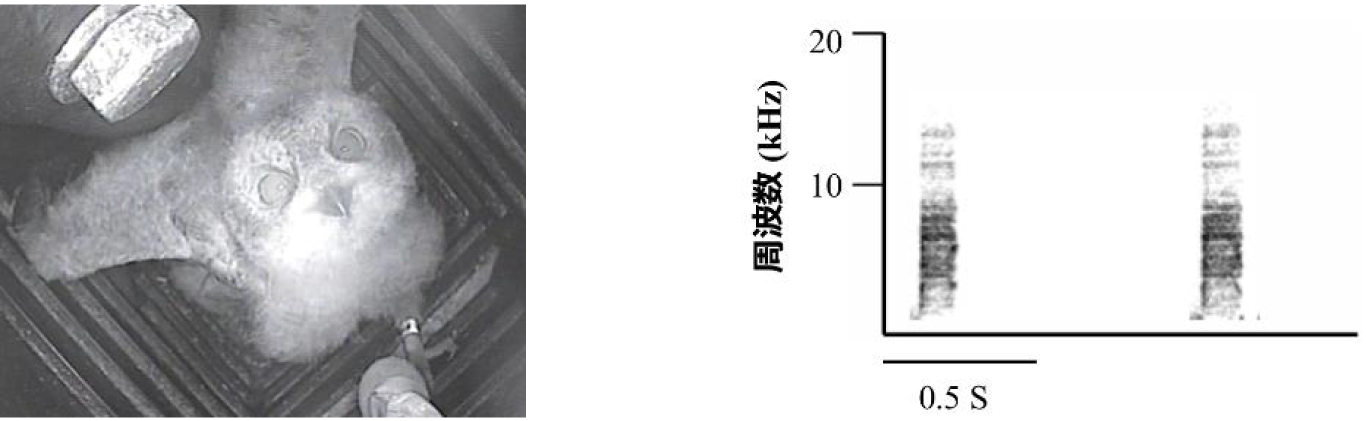
(a)オスの声を聞いて餌乞い声を発するヒナ (b)ヒナの餌乞い声の声紋 ”ジュッ”と聞こえる
<関連情報>
- https://www.hokudai.ac.jp/news/2026/07/post-2389.html
- https://www.jstage.jst.go.jp/article/osj/25/2/25_OSJ-2025-033/_article/-char/ja
南大東島におけるリュウキュウコノハズクのヒナはオスの鳴き声から血縁関係を認識しているか? Do Ryukyu Scops Owl owlets on Minami-daito Island recognize kin relationships based on male hoots?
Sei HORIUCHI, Naoki KANASUGI, Mitsuru SAKAI, Haruka NAKAMURA, Tomonobu NAKATA, Akira SAWADA, Masaoki TAKAGI
Ornithological Science Published:2026/07/31
DOI:https://doi.org/10.2326/osj.OSJ-2025-033
抄録
We examined whether owlets of Ryukyu Scops Owl (Otus elegans) on Minami-daito Island possess kin recognition ability and how this ability develops―whether they are born with it or acquire it through learning. To test this, we played back three types of males’ hoots to the owlets: (1) the hoot of a familiar kin (a kin male they frequently encounter and hear), (2) the hoot of unfamiliar kin (a kin male they may not have met or heard before), and (3) the hoot of non-kin. The owlets typically emit begging calls upon hearing conspecific hoots. If the owlets possess kin recognition ability from birth, they may either (1) respond equally to the hoots of familiar and unfamiliar kin but differentially to the hoot of non-kin, or (2) respond to hoots of males in a graded manner based on genetic relatedness―for example, showing the strongest response to familiar kin, a weaker response to unfamiliar kin, and the weakest response to non-kin. On the other hand, if they acquire kin recognition ability through learning from familiar kin, they should respond differentially only to the hoot of familiar kin while responding equally to both unfamiliar kin and non-kin. Our results showed no significant differences in the number of begging calls in response to different male’s hoots. These findings suggest that owlets of the Ryukyu Scops Owl do not distinguish kin relationships, at least based on male’s hoots and the kin recognition ability based on male’s hoots is not innate.