2026-08-11 中国科学院(CAS)
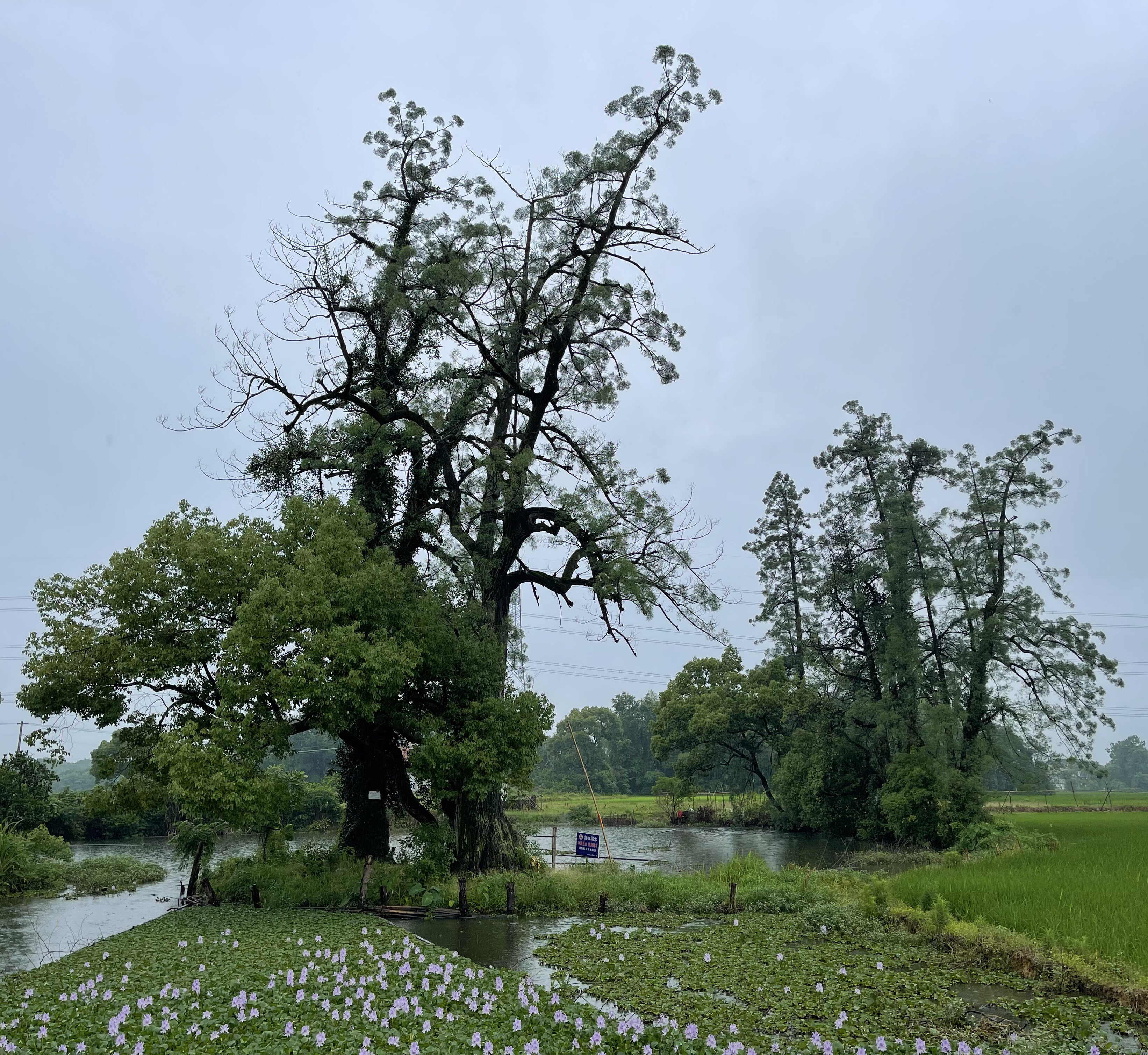
Five ancient Chinese swamp cypress trees showing poor growth in Shangrao, Jiangxi, China. (Image by ZHANG Weiping)
<関連情報>
- https://english.cas.cn/newsroom/research-news/202608/t20260810_1187761.shtml
- https://www.nature.com/articles/s41477-026-02367-9
絶滅危惧種の針葉樹における古代樹の進化上の重要性は、樹齢ではなく個体群の歴史によってもたらされる Population history rather than tree age contributes to the evolutionary importance of ancient trees in an endangered conifer
Wei-Ping Zhang,Chao Feng,Xi-Zuo Shi,Shou-Jie Li,Martin Lascoux & Ming Kang
Nature Plants Published:11 August 2026
DOI:https://doi.org/10.1038/s41477-026-02367-9
Abstract
Ancient trees are in global decline and face increasing conservation challenges. Their exceptional longevity has fostered the view that they are genetic reservoirs, yet whether old age is synonymous with unique genetic variation remains unclear. Here we assembled a ~8-Gb chromosome-level reference genome for the critically endangered conifer Glyptostrobus pensilis, now largely restricted to southern China with scattered populations in Vietnam and Laos, and resequenced 147 individuals, including 64 ancient (>100 years old and persisting in human-dominated landscapes), 33 wild and 50 recently cultivated individuals. Ancient individuals comprised both likely natural relics and historically introduced individuals and formed two deeply divergent lineages and one ancestral–admixed group, each with distinct demographic histories of prolonged contraction and genomic erosion. Lineage identity explained more variation in genome-wide diversity, inbreeding and genetic load than the three conservation types, despite broad differences in age structure. Rare-allele analyses revealed pronounced heterogeneity among ancient trees: only relic and ancestral-origin individuals from high-diversity lineages contributed substantial unique variation, much of which is poorly represented in wild and cultivated populations. Together, our findings suggest that ancient trees are not uniformly genetically irreplaceable and that, at least in this conifer, evolutionary importance is shaped more strongly by population history than by age alone.