2026-08-11 中国科学院(CAS)
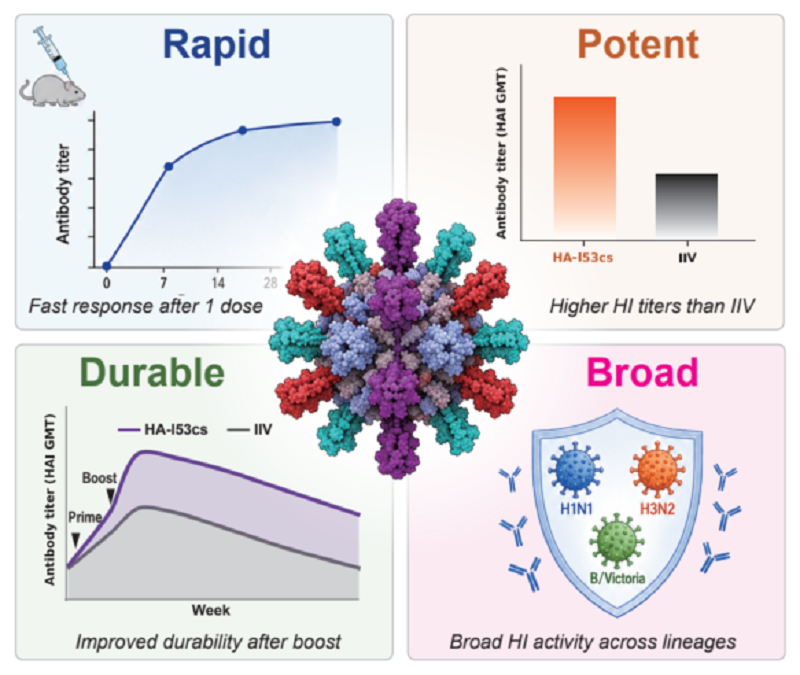
AI-designed protein nanoparticles enable multivalent display of influenza HA antigens, eliciting faster, stronger, more durable, and broader antibody responses. (Image by WANG Xiangxi’s group)
<関連情報>
- https://english.cas.cn/newsroom/research-news/202608/t20260812_1187829.shtml
- https://academic.oup.com/proteincell/advance-article/doi/10.1093/procel/pwag046/8731965
設計されたナノ粒子は、インフルエンザHAの多価表示を可能にし、迅速で強力かつ持続的な交差反応性抗体応答を誘導する Designed nanoparticles enable multivalent display of influenza HA to drive rapid, potent, durable, and cross-reactive antibody responses
Pan Liu,Yongyi Xi,Jiali Deng,Shiqiang Luo,Tianci Liu,Chujun Ding,Qianhui Zhu,Lan He,Mingkai Li,Nan Wang,…
Protein & Cell Published:10 July 2026
DOI:https://doi.org/10.1093/procel/pwag046
Dear Editor
Influenza virus (IV) continues to pose a substantial global public health burden. Despite the widespread deployment of seasonal vaccines, influenza is responsible for approximately one billion cases annually worldwide, including 3–5 million cases of severe illness and 290,000–650,000 respiratory deaths each year (World Health Organization, 2025). Current vaccines primarily confer protection by eliciting strainspecific antibody responses against hemagglutinin (HA); however, their effectiveness is frequently compromised by antigenic drift (Bedford et al., 2015), as well as the limited magnitude and durability of humoral immunity (Ellebedy et al., 2016). In particular, soluble or monomeric antigens often fail to efficiently cross-link and activate B cell receptors, resulting in suboptimal germinal center (GC) responses and impaired antibody maturation (Mukherjee et al., 2013). These limitations underscore an urgent need for next-generation vaccine strategies capable of enhancing the magnitude, quality, and breadth of antibody responses.