2026-10-06 デラウェア大学(UD)
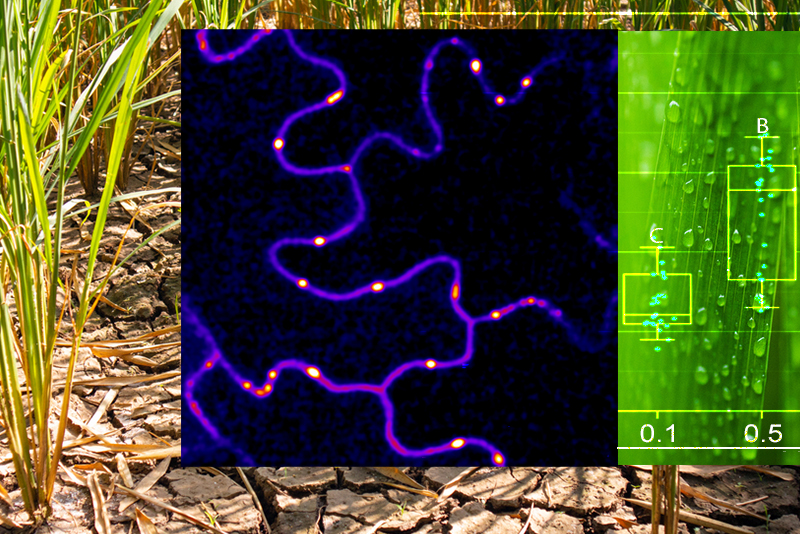
UD plant scientists have uncovered new knowledge that tiny nanopores called plasmodesmata send alert signals between plant cells, generating a huge burst of hydrogen peroxide when a plant is wounded.
<関連情報>
- https://www.udel.edu/udaily/2026/october/plant-cell-communication-hydrogen-peroxide-jung-youn-lee-jeffrey-caplan/
- https://academic.oup.com/plcell/article/38/7/koag192/8713048
原形質連絡は植物のストレス時に動的な局所的および全身的な酸化還元反応を示す Plasmodesmata display dynamic local and systemic redox responses during plant stress
Niraj Kumar Vishwakarma, Md Abdur Razzak, Vishnu Mishra, Timothy Chaya, Jeffrey L Caplan, Jung-Youn Lee
The Plant Cell Published:22 June 2026
DOI:https://doi.org/10.1093/plcell/koag192
Abstract
Hydrogen peroxide (H2O2) is a potent reactive oxygen species that plays a crucial role as a versatile signaling molecule for cellular function and vitality. Recent experimental evidence indicates that H2O2 affects cell-to-cell communication through plasmodesmata, tiny cytoplasmic nanopores connecting adjacent plant cells. H2O2-dependent systemic signaling has also been reported to involve plasmodesmal function in some contexts, although the dominant routes and messengers underlying rapid long-distance signaling remain under active debate. Nevertheless, direct monitoring of redox dynamics at plasmodesmata in live tissues has remained challenging. In this study, we developed a plasmodesmata-localized HyPer7 (Pd-HyPer7) reporter to investigate H2O2 dynamics at plasmodesmata in response to exogenous redox stressors and plant stresses, including cold and mechanical wounding. Pd-HyPer7 showed response characteristics that differed from the HyPer7 reporters localized to the cytosol, plasma membrane, and chloroplasts under the conditions tested, indicating that redox responses at plasmodesmata are distinguishable from these compartments. Notably, during mechanical wounding, both the cytosol and plasmodesmata showed transient redox responses with broadly similar temporal profiles in local tissues. In systemic tissues, however, the responses were temporally separated, with plasmodesmal oxidation peaking well after the cytosolic response. This timing relationship is consistent with plasmodesmata acting downstream of early systemic wound signaling, rather than simply mirroring cytosolic redox dynamics. Together, our results establish Pd-HyPer7 as a tool for monitoring plasmodesmal redox dynamics and support a model in which plasmodesmata participate in spatially and temporally regulated redox responses during plant stress.