2026-09-02 ペンシルベニア州立大学(Penn State)
<関連情報>
- https://www.psu.edu/news/research/story/fish-dads-offer-new-insight-behavioral-effects-receiving-paternal-care
- https://royalsocietypublishing.org/rstb/article/381/1955/20250015/482603/Dads-matter-too-the-behavioural-and-neurogenomic
父親の存在も重要:父親の養育を受けることによる行動面および神経ゲノム面への影響 Dads matter, too: the behavioural and neurogenomic effects of receiving paternal care
Jason Keagy;Alison Bell
Philosophical Transactions of the Royal Society B Published:23 Jul 2026
DOI:https://doi.org/10.1098/rstb.2025.0015
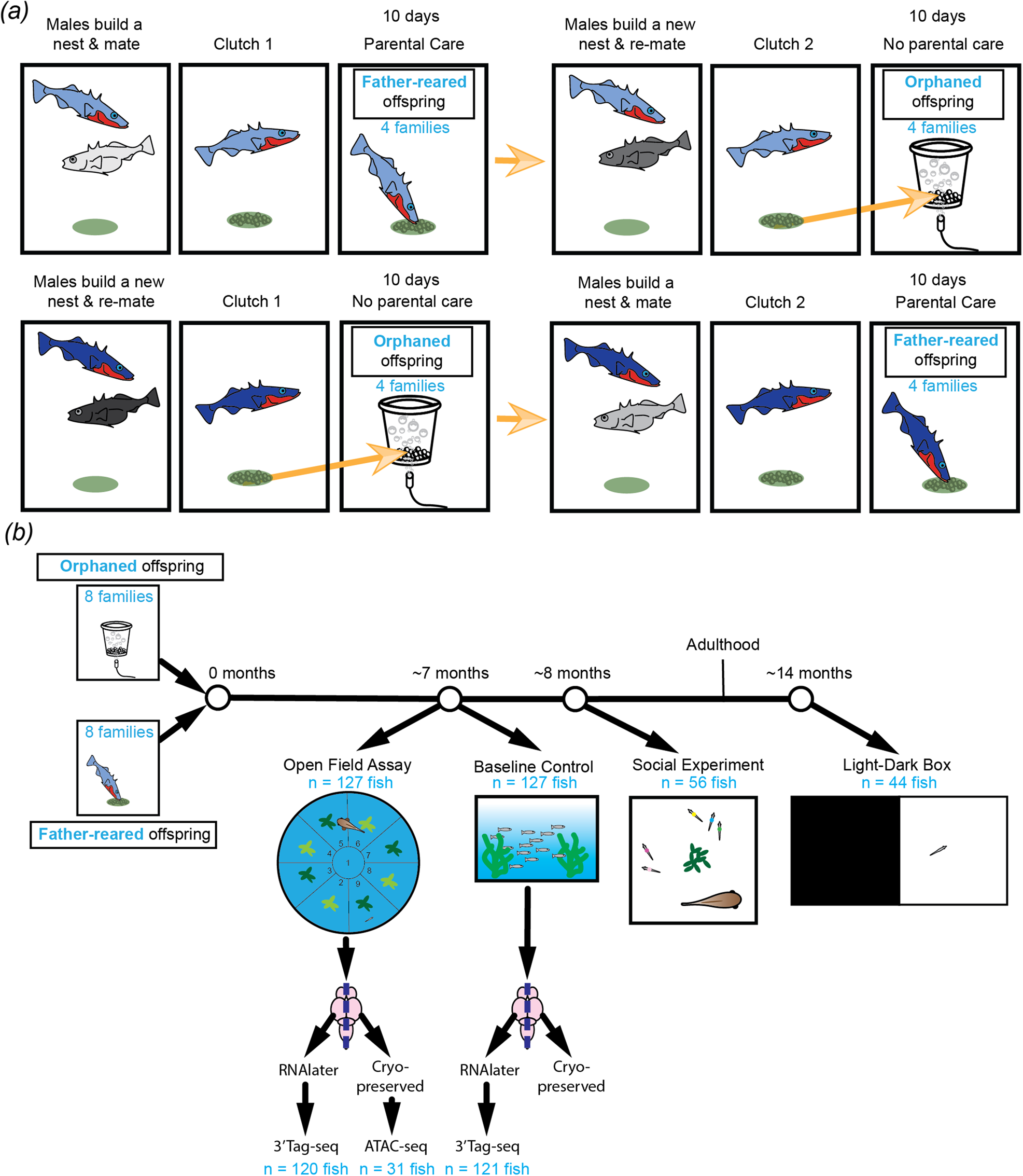
Abstract
The early life environment can strongly influence behavioural development. However, little is known about the underlying neurogenomic mechanisms. Using a half-sib design, threespine stickleback fish were either raised by their fathers or hand-reared (‘orphaned’) for 10 days before living in a common-garden environment. As offspring developed, they were tested in one of three behavioural assays: an open field assay with a simulated predator attack, a social behaviour assay with a simulated predator attack, and a light–dark box assay. Offspring that received paternal care behaved in ways that we interpret as indicating increased boldness and sociability. Fish in the open field assay had their brains sampled one hour following the simulated attack; brains were sampled at the same time from full-sib controls. These brains were processed for gene expression (via 3′Tag-seq) and chromatin accessibility (via ATAC-seq). Paternal care treatment and the predator attack affected brain gene expression, but sex was also a major factor, despite fish being reproductively immature. Sex, and to a lesser extent, paternal care treatment, also influenced chromatin accessibility at a whole-genome scale. Our findings further our understanding of the mechanisms by which the early life environment—including the environment provided by parents—influences offspring behavioural development.