2026-06-11 ノースウェスタン大学
<関連情報>
- https://news.northwestern.edu/stories/2026/06/some-drugs-fail-because-of-unrealistic-testing-conditions
- https://www.nature.com/articles/s41594-026-01818-3
- https://www.nature.com/articles/s41594-026-01818-3.epdf
温度と内在性Ca2 +がTRPM4の薬理作用を変化させる Temperature and intrinsic Ca2+ reshape TRPM4 pharmacology
Jinhong Hu,Sofia Ievleva,Sung Jin Park,Junuk Lee,Jie Cheng,Garrett O’Dea,Jiangnan Sheng,Juan Du & Wei Lü
Nature Structural & Molecular Biology Published:09 June 2026
DOI:https://doi.org/10.1038/s41594-026-01818-3
Abstract
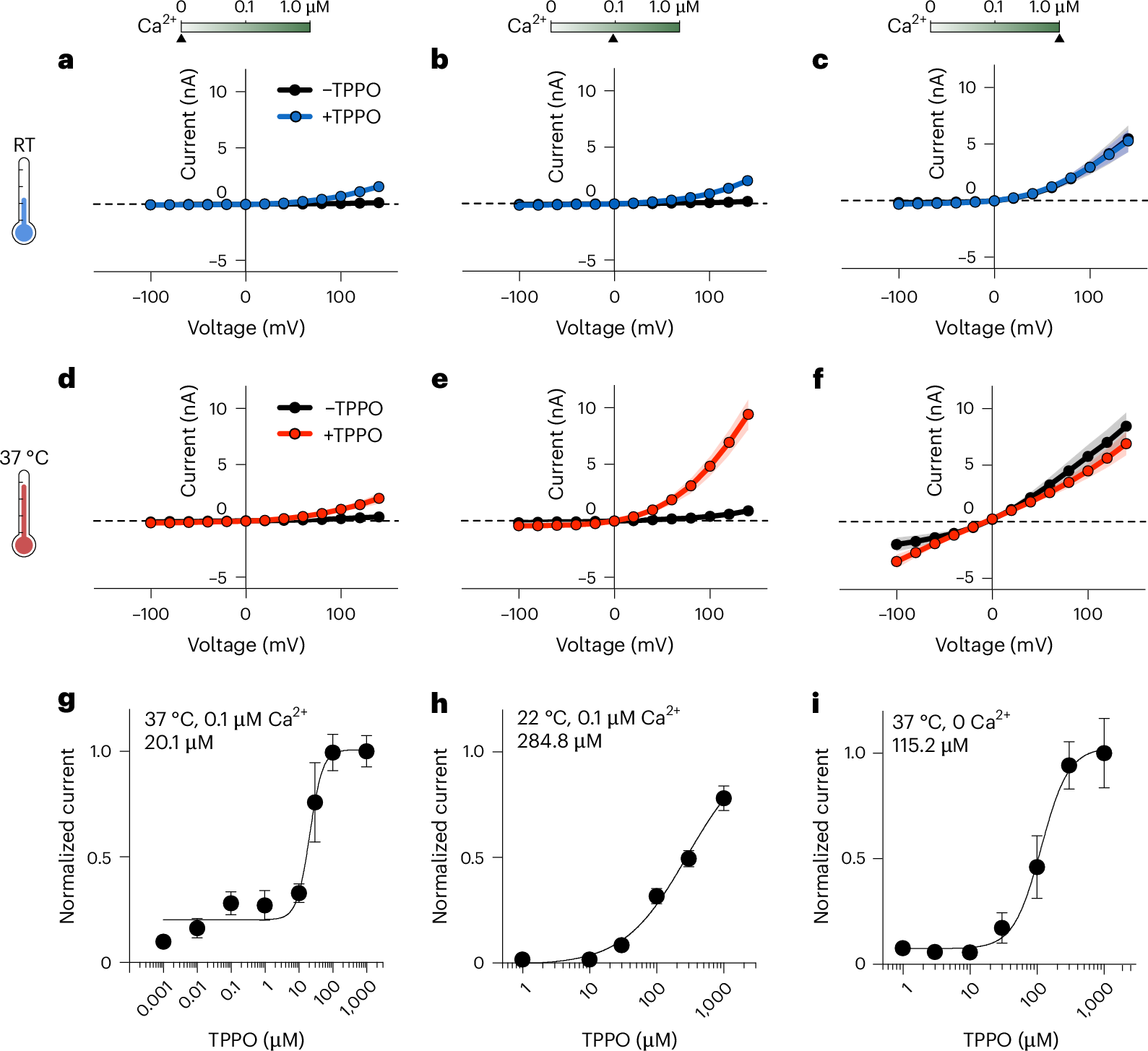
Proteins operate in dynamic environments where ions, lipids and temperature collectively define their properties, yet most studies rely on simplified conditions that overlook these intrinsic variables. Here we show two such factors—temperature and Ca2+—remodel the function and pharmacology of TRPM4, an ion channel implicated in cardiac conduction, immune regulation, cancer and intestinal-fluid homeostasis. At physiological temperature and Ca2+, TPPO—previously considered a selective TRPM5 inhibitor inactive toward TRPM4—potently activates TRPM4, revealing strong synergy among temperature, Ca2+ and ligand binding. By contrast, Necrocide-1, a necroptotic activator targeting the same binding pocket, defies this logic: it opens TRPM4 without Ca2+ but is antagonized by Ca2+. Meanwhile, the inhibitors NBA and CBA engage a nearby pocket, locking the channel in a non-conductive pre-open state. Our findings highlight that even rigid binding pockets can exhibit temperature-dependent ligand recognition, revealing hidden pharmacology and informing selective, environment-aware therapeutic strategies.