2026-08-05 テキサス大学オースチン校(UT Austin)
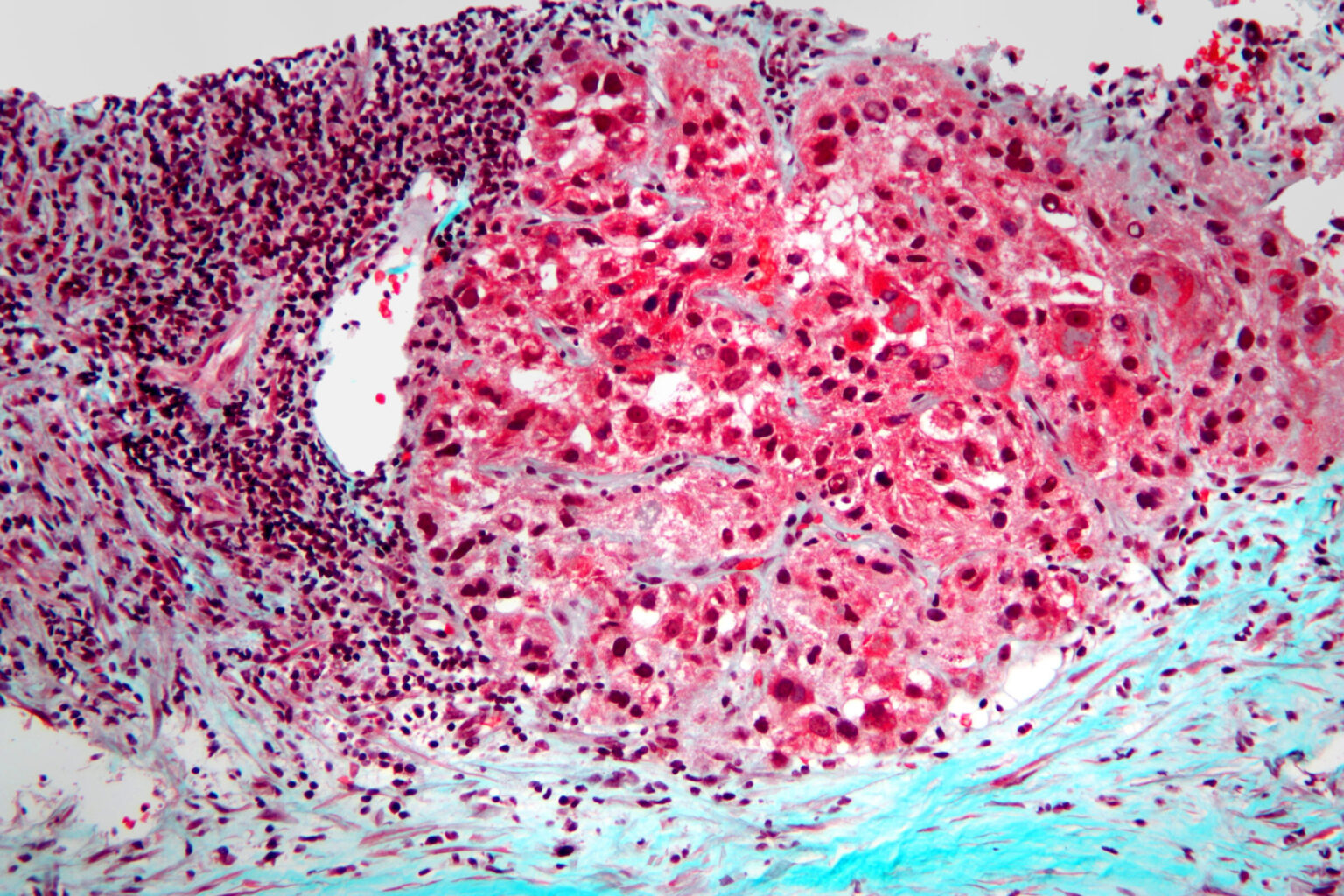
Microscope image of hepatocellular carcinoma, the most common form of cancer to arise in the liver.
<関連情報>
- https://news.utexas.edu/2026/08/05/experimental-drug-turns-cancers-favorite-fuel-sugar-against-it/
- https://www.nature.com/articles/s41589-026-02289-9
共有結合型PFKL活性化剤は腫瘍の増殖を抑制する A covalent PFKL activator suppresses tumor growth
Xiaoding Jiang,Eric M. Lynch,Congcong Lyu,Crystal N. Wilson,Lauren E. Salay,Hayden T. Hess,Scott N. Lyons,Mu-Jie Lu,Shuangyu Luo,Gibae Kim,Hsin-Ru Chan,Wesley J. Wolfe,Lauren G. Zacharias,Thomas P. Mathews,Yi-Chih Lin,Bradley A. Webb,Justin M. Kollman,Xiaolu A. Cambronne & Ku-Lung Hsu
Nature Chemical Biology Published:05 August 2026
DOI:https://doi.org/10.1038/s41589-026-02289-9
Abstract
Glycolysis fuels vital cellular functions, and its dysregulation has been implicated in cancer, neurodegeneration, antibiotic resistance and diabetes. The glycolytic dependency of cancer, known as the Warburg effect, represents a key vulnerability for development of targeted anticancer agents; however, the development of such agents remains challenging owing to metabolic heterogeneity and resistance. Here we developed a covalent phosphofructokinase-1 liver type (PFKL) activator that couples glycolytic activation with delivery of a cytotoxic carnitine palmitoyltransferase 2 (CPT2)-targeting payload to cancer cells in vitro and in vivo. The electrophile–drug conjugate site-specifically and proteome-wide selectively modifies K677 in the allosteric effector site to stabilize the R-state tetramer of PFKL, while concomitantly releasing a CPT2-selective inhibitor to destabilize cell metabolism. The delivery mechanism of electrophile–drug conjugates is analogous to that of antibody–drug conjugates, but differentiated by their selective covalent targeting of intracellular proteins.