愛媛大学大学院農学研究科2年生の兵頭慧真さんの筆頭著者論文が学術誌「ACS Nutrition Science」に掲載
2026-07-09 愛媛大学
<関連情報>
5,7,3′,4′-テトラメトキシフラボンがミクログリアの炎症反応およびマウスにおけるリポ多糖誘発性神経炎症に及ぼす影響 Effects of 5,7,3′,4′-Tetramethoxyflavone on Inflammatory Responses in Microglia and Lipopolysaccharide-Induced Neuroinflammation in Mice
Keishin Hyodo,In-Hae Kim,Satoshi Okuyama,Mikio Shindo,Takuya Sugahara,and Kosuke Nishi
ACS Nutrition Science Published: July 3, 2026
DOI:https://doi.org/10.1021/acsnutrsci.6c00026
Abstract
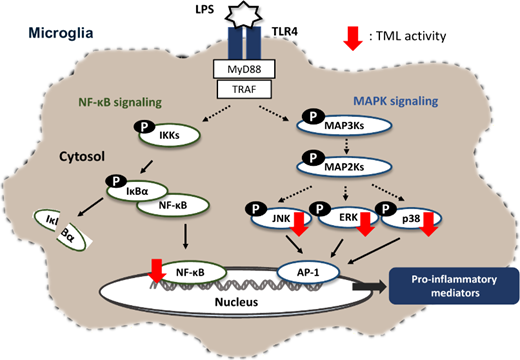
Neuroinflammation is an immune response to various inflammatory stimuli within the central nervous system. Abnormal activation of this response contributes to the pathogenesis of neurodegenerative disorders, including Parkinson’s and Alzheimer’s diseases. Therefore, regulating abnormal neuroinflammation is considered a promising approach for preventing neurodegenerative diseases. This study aimed to investigate the anti-inflammatory activity of 5,7,3′,4′-tetramethoxyflavone (tetramethylluteolin, TML), a type of flavonoid, in BV2 microglial cells and a mouse model. In LPS-induced inflammatory BV2 microglial cells, TML significantly suppressed the production of IL-6, TNF-α, and nitric oxide. It also inhibited the phosphorylation of MAPK (JNK, ERK, p38) and the nuclear translocation of NF-κB. These findings suggest that the anti-inflammatory activity of TML is associated with the downregulation of the MAPK and NF-κB signaling pathways. A tendency for the anti-inflammatory activity of TML was also suggested in lipopolysaccharide-induced neuroinflammation in mice. These results point toward a possible role for TML in the prevention of neuroinflammation-related diseases.