2026-08-20 京都大学iPS細胞研究所
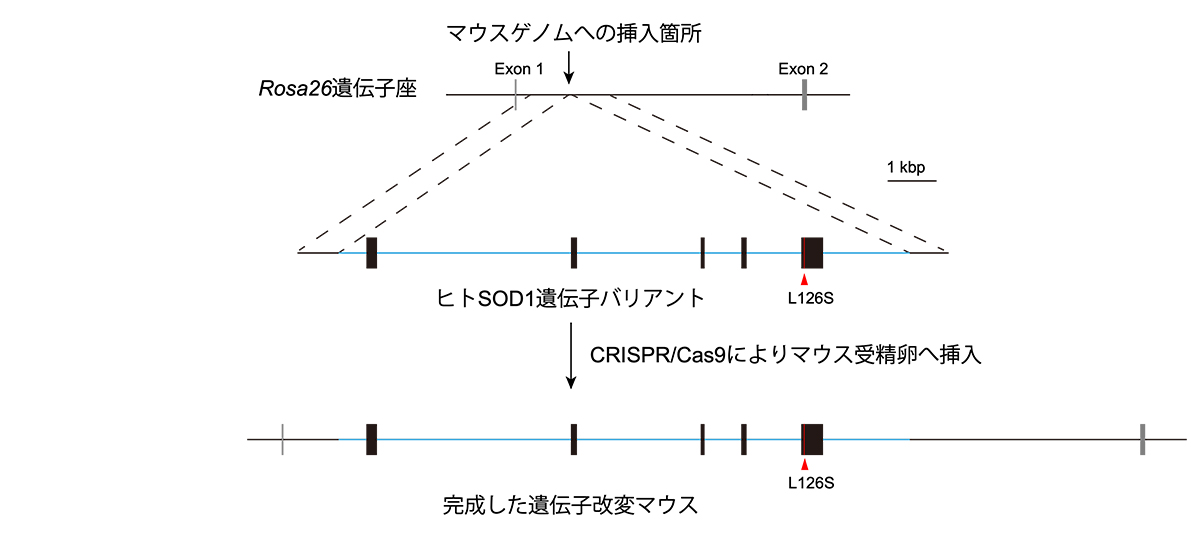
(図1)ヒトSOD1遺伝子バリアントを有する遺伝子改変マウスの作製方法(模式図)
<関連情報>
- https://www.cira.kyoto-u.ac.jp/j/pressrelease/news/260820-130000.html
- https://www.jstage.jst.go.jp/article/expanim/advpub/0/advpub_26-0040/_article
筋萎縮性側索硬化症に対するゲノム編集療法の開発プラットフォームとして、Rosa26遺伝子座に変異型ヒトSOD1ノックインマウス系統を作製する Generation of mutant human SOD1 knock-in mouse lines at the Rosa26 locus as a platform for developing genome-editing therapies for amyotrophic lateral sclerosis
Taro OKUNOMIYA, Tomoki SAKASAI, Kayoko TSUKITA, Rina SHIMIZU, Aya OKUSA, Masahiro ADACHI, Saki TOMITA, Akito TANAKA, Takayuki KONDO, Keiko IMAMURA, Haruhisa INOUE
Experimental Animals Published:August 08, 2026
DOI:https://doi.org/10.1538/expanim.26-0040
Abstract
Amyotrophic lateral sclerosis (ALS) is a progressive neurodegenerative disease characterized by the degeneration of upper and lower motor neurons, resulting in progressive paralysis and death within a few years of symptom onset. Although current treatments modestly slow the disease progression, effective disease-modifying and curative therapies remain an urgent unmet need. SOD1 mutations are one of the major genetic causes of familial ALS. The p.Leu127Ser (L126S) and p.Gly94Ser (G93S) variants are clinically relevant pathogenic variants for which appropriate animal models are needed for preclinical evaluation of gene-editing therapies. However, most existing SOD1 models rely on high copy overexpression of mutant SOD1. Therefore, animal models carrying a single copy mutant human SOD1 allele are required for evaluating the in vivo efficacy of genome editing therapies. Here, we used CRISPR/Cas9-mediated homology-directed repair to generate a knock-in mouse line at the Gt(ROSA)26Sor (Rosa26) locus carrying a single-copy, 11-kb human SOD1 genomic fragment, including all exons and introns, with the L126S mutation. The Rosa26-hSOD1L126S mice did not develop ALS-like phenotypes during the limited observation period. However, they faithfully retained a single-copy mutant human SOD1 genomic allele, providing a valuable preclinical platform for evaluating genome-editing therapies. We also generated Rosa26-hSOD1G93S mice carrying the SOD1 G93S mutation with comparable efficiency. Together, these mutant human SOD1 knock-in mouse lines provide a versatile and clinically relevant platform for the preclinical evaluation of genome-editing therapies targeting heterozygous SOD1 mutations.