2026-08-31 岐阜大学
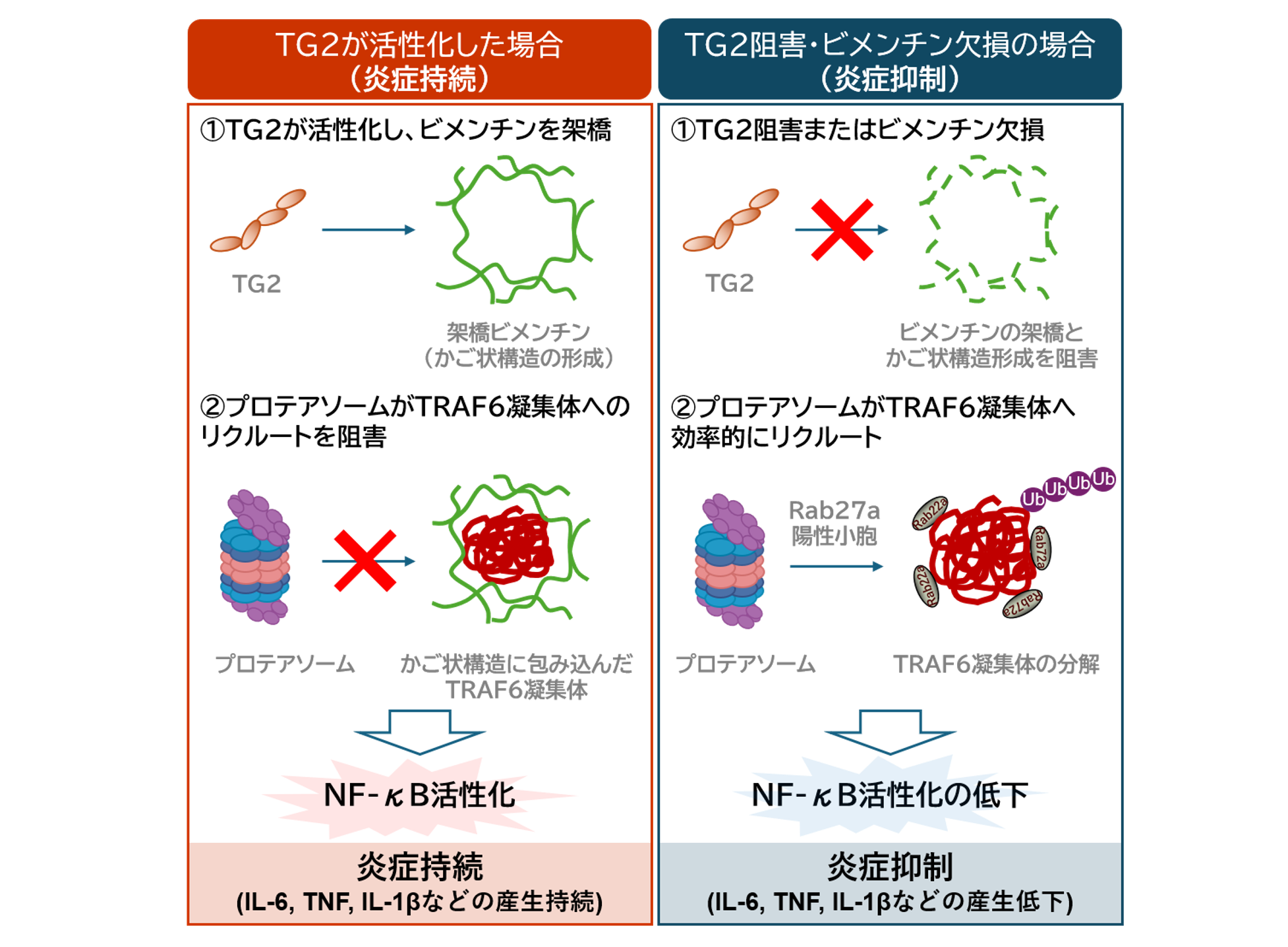
TG2-ビメンチン軸によるマクロファージの炎症制御モデル
<関連情報>
- https://www.gifu-u.ac.jp/news/research/2026/08/entry31-15300.html
- https://www.science.org/doi/10.1126/sciadv.aea7513
トランスグルタミナーゼ2はマクロファージ活性化中のビメンチン依存性タンパク質恒常性を調節する Transglutaminase 2 regulates vimentin-dependent proteostasis during macrophage activation
Yali Xu, Ting Su, Hricha Mishra, Naoshi Dohmae, […] , and Xian-Yang Qin
Science Advances Published:28 Aug 2026
DOI:https://doi.org/10.1126/sciadv.aea7513
Abstract
Sepsis-associated liver dysfunction is a life-threatening condition with a high mortality rate and no mechanism-based therapy. In this study, we identify the cross-linking enzyme transglutaminase 2 (TG2) as a driver of liver inflammation by activating macrophages in a mouse model of sepsis. Pharmacological inhibition of TG2 improves survival and reduces multiorgan inflammation, with the liver as a primary therapeutic target. Mechanistically, TG2 activity was up-regulated in macrophages, where it cross-linked vimentin to promote oligomerization and intermediate filament remodeling. Genetic ablation of TG2 or vimentin suppressed macrophage cytokine production and attenuated lipopolysaccharide-induced inflammation. Notably, vimentin-deficient macrophages exhibited enhanced proteasome recruitment to detergent-insoluble protein aggregates, accelerating the degradation of proinflammatory mediators such as Traf6, thereby dampening nuclear factor κB signaling. Proteomic profiling revealed a previously unrecognized Rab27a-positive vesicle trafficking pathway for inflammatory aggregate clearance. Together, these findings define a TG2–vimentin axis that controls macrophage activation through proteostasis regulation, linking cytoskeletal remodeling to inflammatory signaling.