2026-08-27 韓国基礎科学研究院(IBS)
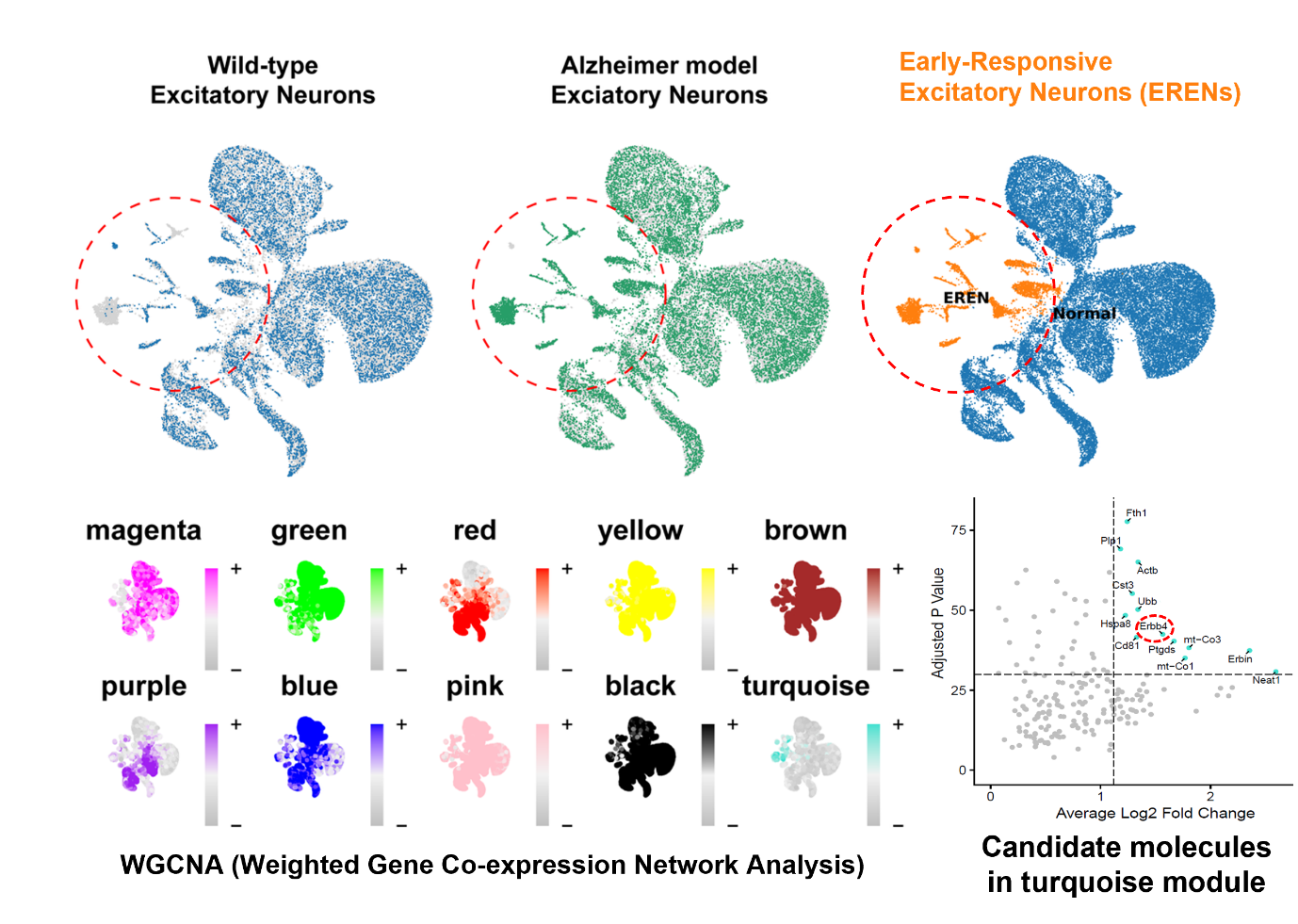
Figure 1. Discovery of Early Responsive Excitatory Neurons (ERENs) through single-nucleus RNA sequencing (snRNA-seq)
Comparison of snRNA-seq data from wild-type and Alzheimer’s disease model mice revealed a distinct population of excitatory neurons that was selectively enriched in the Alzheimer’s disease model. This population was designated Early-Responsive Excitatory Neurons (ERENs) (top). Weighted gene co-expression network analysis (WGCNA) identified gene modules associated with ERENs, with ERBB4 emerging as a prominent candidate molecule within the turquoise module. (bottom).
<関連情報>
- https://www.ibs.re.kr/cop/bbs/BBSMSTR_000000000738/selectBoardArticle.do?nttId=26987&pageIndex=1&searchCnd=&searchWrd=
- https://www.nature.com/articles/s41586-026-10964-z
異常な興奮性神経細胞ERBB4はアルツハイマー病の病理を促進する Aberrant excitatory neuronal ERBB4 promotes Alzheimer’s disease pathology
Se Young Lee,Eunseok Park,Ha-Eun Lee,Seongbin Kim,Yeji Yeo,Juwon Park,Young-Jin Choi,Kiheon Lee,Ki-Jun Yoon,Sanghoon Park,Eunjoon Kim,Jae-Ick Kim & Won-Suk Chung
Nature Published:26 August 2026
DOI:https://doi.org/10.1038/s41586-026-10964-z
Abstract
Neuroinflammation and synapse loss are associated with cognitive decline in Alzheimer’s disease (AD). Although microglial hyperphagocytic activity has been implicated in synapse loss1,2,3,4, the mechanisms underlying these pathologies remain obscure. Here we demonstrate that, during AD progression in mice, astrocytes and microglia increase phagocytic elimination of excitatory synapses while reducing elimination of inhibitory synapses, suggesting that neuroinflammation alone may be dispensable for early AD synapse loss. Instead, single-nucleus RNA-sequencing analysis identified the emergence of early-responsive excitatory neurons (EREN), characterized by expression of ectopic Erb-B2 receptor tyrosine kinase 4 (Erbb4), as one of the earliest major alterations in AD mouse models. Selective Erbb4 deletion in AD excitatory neurons abrogated abnormal neuronal network activities and synapse loss, as well as reactive gliosis, amyloid plaque deposition and cognitive deficits. Conversely, Erbb4 overexpression in wild-type excitatory neurons recapitulated these core AD-like phenotypes without amyloid plaques. Mechanistically, these effects required mammalian target of rapamycin (mTOR) signalling downstream of ERBB4. Subsequent transcriptomic analyses showed that excitatory neuronal Erbb4 is both necessary and sufficient to induce EREN and reactive gliosis. Directed mediation analysis of human AD transcriptomic data further support a model in which excitatory neuronal ERBB4 contributes to a pathogenic cascade that links amyloid pathology to tau propagation and cognitive decline. These findings identify aberrant Erbb4 expression in excitatory neurons as an early driver of AD pathophysiology and a potential therapeutic target across neurodegenerative diseases.