2026-04-06 京都大学

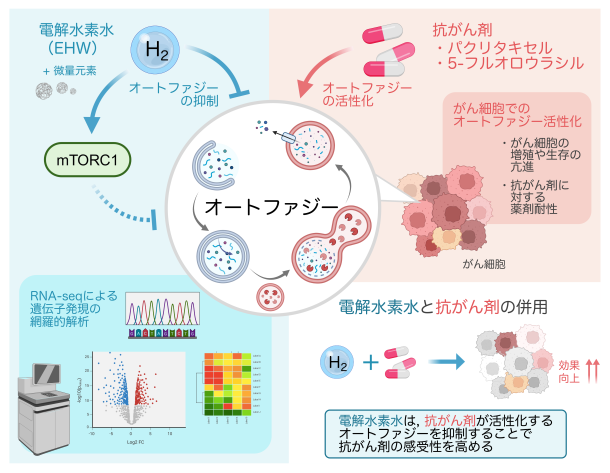
本研究の概念図(©佐藤駿)
<関連情報>
- https://www.kyoto-u.ac.jp/ja/research-news/2026-04-06-1
- https://www.kyoto-u.ac.jp/sites/default/files/2026-04/web_2604_Sato-b62aa714b5f498a571903cae7e24a66c.pdf
- https://www.nature.com/articles/s42003-026-09814-5
タンガニイカ湖産カワスズメ科魚類における協同繁殖の複数回進化と生活史形質 Repeated evolution of cooperative breeding and life history traits in Lake Tanganyika cichlids
Shun Satoh,Seiya Okuno,Takeshi Ito,Joachim G. Frommen,Taiga Saeki,Michio Hori,Ryo Hidaka,Ryoichi Inoue,Yuki Yoshio,Masaya Morita,Nobuyuki Kutsukake,Masanori Kohda,Fumihito Tashiro & Satoshi Awata
Communications Biology Published:10 March 2026
DOI:https://doi.org/10.1038/s42003-026-09814-5 Unedited version
Abstract
Cooperative breeding is a social system where offspring receive care not only from their parents but also from other group members. The life history traits related to the evolutionary transition towards such complex systems are still poorly understood. This study investigated the evolutionary transition from non-cooperative to cooperative breeding in lamprologine cichlid fishes endemic to Lake Tanganyika using phylogenetic comparative methods. Ancestral state reconstruction revealed that the evolutionary transition from non-cooperative to cooperative breeding occurred at least seven times independently. Comparative analyses using life history data obtained from field observations and from published literature revealed an evolutionary link between cooperative breeding and clutch and body size, but not egg size: cooperative breeders were smaller and laid fewer eggs than non-cooperative breeders. These findings suggest an evolutionary scenario where cooperative breeding evolved in smaller species, most likely because of ecological factors, such as an increased predation risk, driving the evolution of complex social systems. This was followed by a reduction in clutch size. These results shed light on the role of ecological settings in life history trait evolution and how they mediate the transition towards a complex social organization.