2026-05-20 北京大学(PKU)
<関連情報>
- https://newsen.pku.edu.cn/news_events/news/research/15534.html
- https://www.cell.com/cell/abstract/S0092-8674(26)00456-3
植物におけるフィトアレキシンを介した化学防御の遺伝的基盤 Genetic basis of phytoalexin-mediated chemical defense in plants
Zhanli Wang ∙ Lu Han,, ∙ Lei Gao ∙ … ∙ Yiguo Hong ∙ Xiaoguang Lei ∙ Yule Liu
Cell Published:May 8, 2026
DOI:https://doi.org/10.1016/j.cell.2026.04.021
Highlights
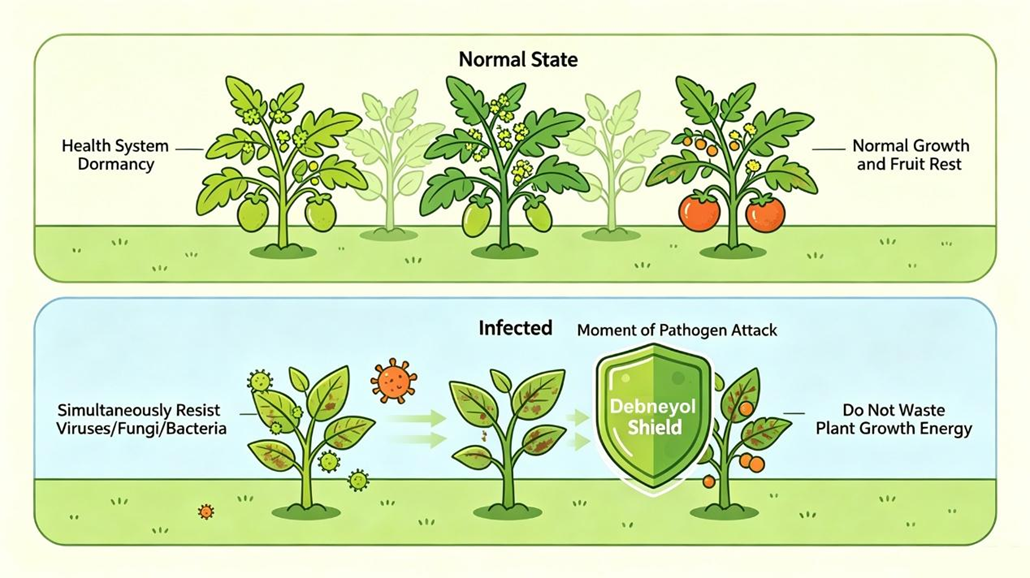
- The miR1919-MCD1 module governs the biosynthesis of the phytoalexin debneyol
- Debneyol is synthesized from FPP via three enzymes: EAS, EAE, and EH1
- MCD1 acts as a metabolic organizer to enhance EAE activity and substrate channeling
- Elevated MCD1 expression and debneyol confer plant broad-spectrum disease resistance
Summary
Phytoalexins are core components of plant chemical defense against pathogens. However, the genetic basis and regulatory mechanisms governing their biosynthesis remain preliminary. Debneyol is a well-defined, broad-spectrum fungicidal phytoalexin. Here, we elucidate its biosynthetic pathway, key regulators, and activity against multiple pathogens. We show that debneyol is synthesized from farnesyl pyrophosphate (FPP) through three steps catalyzed by 5-epi-aristolochene synthase (EAS), 5-epi-aristolochene epoxidase (EAE), and epoxide hydrolase-1 (EH1). MCD1 (miR1919-targeted cell death-factor-1) interacts with EAS and EAE, enhancing their association and EAE activity and promoting debneyol biosynthesis. Increased MCD1 expression confers plant resistance not only against fungal but also viral and bacterial pathogens. Our work reveals a complete plant phytoalexin-based chemical defense machinery, opening avenues for engineering broad-spectrum plant resistance and industrial-scale debneyol production via synthetic biology.