2026-08-27 英国研究イノベーション機構(UKRI)
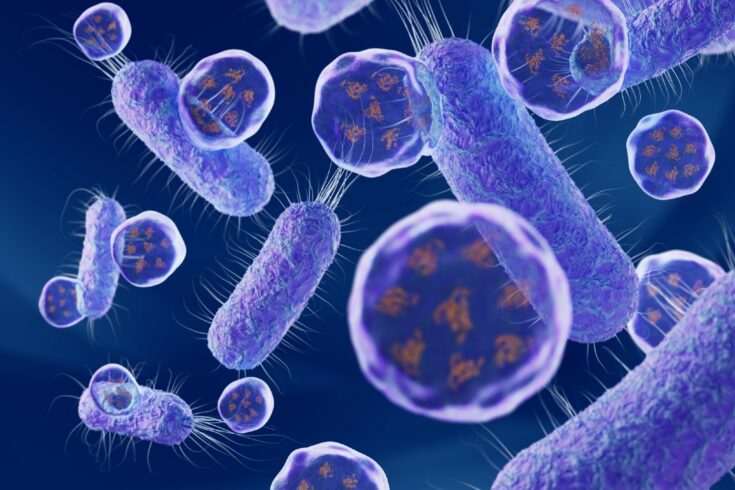
Recombinant proteins (orange) ‘packaged’ in membrane-bound vesicles and exported from the bacterial cells as a result of the Vesicle Nucleating Peptide (VNp) technology. (Credit: University of Kent)
<関連情報>
- https://www.ukri.org/news/spin-out-technology-promises-to-cut-costs-of-protein-production/
- https://isevjournals.onlinelibrary.wiley.com/doi/10.1002/jev2.70354
小胞核形成ペプチド融合によって誘導される細胞外小胞は、大腸菌の外膜小胞とは異なり、タンパク質生産および精製のための強化されたプラットフォームを提供する Vesicle Nucleation Peptide Fusion Induced Extracellular Vesicles Are Distinct From Escherichia coli Outer Membrane Vesicles, and Provide an Enhanced Platform for Protein Production and Purification
Bree R. Streather, Tara A. Eastwood, Karen Baker, Mingzhi Liang, Alexandra E. Bailie, Tijn T. van der Velden, Lars J. C. Jeuken, Stanley W. Botchway, Lin Wang, Daniel P. Mulvihill
Journal of Extracellular Vesicles Published:14 August 2026
DOI:https://doi.org/10.1002/jev2.70354
ABSTRACT
Bacterial outer membrane vesicles (OMVs) are nano-sized, spherical structures released by Gram-negative bacteria that play diverse roles in bacterial physiology, including communication, nutrient acquisition and host interactions. These vesicles bud from the bacterial outer membrane and contain lipopolysaccharides, periplasmic proteins, nucleotides and other biomolecules. The vesicle nucleating peptide (VNp) is a short peptide tag that, when fused to the amino terminus of a protein of interest, promotes the formation of bespoke recombinant extracellular vesicles (EVs) in Escherichia coli, enabling efficient production and simplified purification of recombinant proteins. Here, we characterise VNp-induced extracellular vesicles (VNp-EVs) and compare their composition and organisation with OMVs produced from E. coli expressing a periplasmic targeting fusion. While both vesicle types possess a single outer membrane-derived lipid bilayer, recombinant protein is highly enriched within the VNp-EVs compared to OMVs containing the periplasm targeting ssDsbA-fusion protein. VNp-fusions and the periplasm-targeted recombinant protein localise to distinct vesicle populations, with VNp-fusions showing markedly higher luminal concentrations and relative vesicular abundance, compared to the vesicles containing a periplasmic targeted fusion protein. OmpX co-expression further enriched the VNp-fusion content of vesicles, further enhancing yield. The VNp-vesicle lumen is an oxidising environment, thus supports formation of inter- and intra-molecular disulfide bonds within encapsulated proteins. Overall, VNp-EVs represent a distinct class of recombinant EVs that offer a simple and efficient route for producing and purifying concentrated, correctly folded recombinant proteins, expanding the utility of bacterial vesicle systems for biotechnological applications.