2026-06-26 国立遺伝学研究所
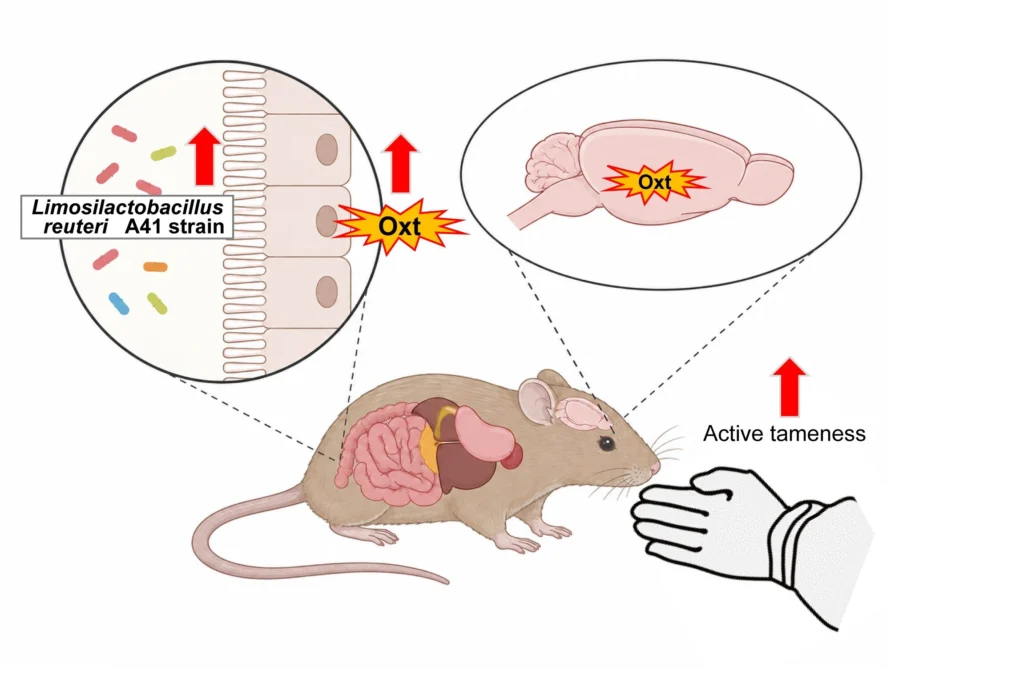
人になつきやすい選択交配マウスから単離したL. reuteriのA41株はなつき行動を上昇させる効果を有する
<関連情報>
- https://www.nig.ac.jp/highlights/14058/
- https://academic.oup.com/dnaresearch/article/33/3/dsag006/8715206
選択的に繁殖された高馴化マウスの腸内における Limosilactobacillus reuteri の増加と行動変化との関連性 Increased abundance of Limosilactobacillus reuteri in the gut of selectively bred high-tameness mice and its association with behavioural changes
Bhim B Biswa,Hiroshi Mori,Atsushi Toyoda,Kazumichi Fujiwara,Ken Kurokawa,Tsuyoshi Koide
DNA Research Published:25 June 2026
DOI:https://doi.org/10.1093/dnares/dsag006
Abstract
Domestication alters animal behaviour, particularly tameness. We previously established 2 tamed mouse groups by selective breeding for active tameness–defined as the motivation to approach a human hand–from genetically heterogeneous wild-derived mouse stock, together with 2 nonselected control groups. Genetic analyses identified loci associated with active tameness, but their low heritability suggested contributions from nongenetic factors. We therefore hypothesized that the gut microbiota, which has been shown to influence brain function, contributes to behavioural changes associated with active tameness. To test this hypothesis, we conducted shotgun metagenomic analyses of faecal samples from 10 males and 10 females (80 individuals total) from the 2 tamed and 2 nonselected groups. Tamed mice exhibited markedly higher levels of active tameness, accompanied by elevated blood concentrations of oxytocin and pyruvate. While overall taxonomic and functional diversity of the gut microbiota was largely unchanged, the abundance of Limosilactobacillus reuteri was significantly increased in the tamed mice. Administration of a pyruvate-secreting L. reuteri strain to nonselected mice elevated blood oxytocin levels and enhanced active tameness, although plasma pyruvate levels were not increased. These findings suggest that L. reuteri is associated with behavioural modulation, potentially via oxytocin-related pathways, and provide mechanistic insight into microbial contributions to animal domestication.