2026-06-15 九州大学
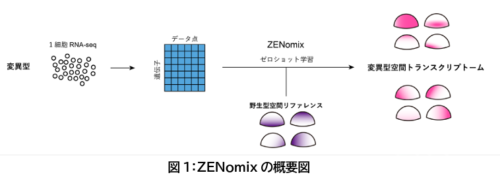
図1.新規ペプチドミクス技術のワークフロー
<関連情報>
- https://www.kyushu-u.ac.jp/ja/researches/view/1504
- https://pubs.acs.org/doi/10.1021/acs.analchem.6c01542
N末端クマリン誘導体化を用いた新規ペプチド配列決定法とLCトラップ型イオンモビリティスペクトロメトリー-qTOF/MSを用いたペプチドミクスへの応用 N-Terminal Coumarin Derivatization-Aided De Novo Peptide Sequencing and Its Application to Peptidomics Using LC-Trapped Ion Mobility Spectrometry-qTOF/MS
Hui Luan,Yumiko Toyama,Fumiya Honda,Ryotaro Asai,Risa Katagihara,Yizhi Xiao,Saya Nakamura,Toshiro Matsui,and Mitsuru Tanaka
Analytical Chemistry Published: June 14, 2026
DOI:https://doi.org/10.1021/acs.analchem.6c01542
Abstract
De novo peptide sequencing using LC–MS/MS enables database-independent sequence determination and facilitates the discovery of bioactive peptides and biomarkers in untargeted peptidomics. However, conventional MS/MS analyses often produce fragment ions that are insufficient for complete sequencing. Here, we established an LC–MS/MS workflow using N-succinimidyl 7-methoxycoumarin-3-carboxylate (Me-Cou) as an N-terminal tag to improve de novo sequencing performance. Me-Cou derivatization generated highly informative fragment ions, particularly b1–b3 ions, for (Gly)4 at 1 μmol/L, surpassing the performance of established tags, such as 2,4,6-trinitrobenzenesulfonic acid, 3-aminopyridyl-hydroxy-succinimidyl carbamate, and N-succinimidyl [tris(2,4,6-trimethoxyphenyl)phosphonio]acetate bromide. The Me-Cou tag also enabled confident sequencing of (Gly)10, generating abundant b1–b9 ions. Notably, intact de novo sequencing identified 74 peptides with 32 misidentified peptides that were not included in a 132-standard peptide mixture (86 dipeptides and 46 oligopeptides). However, all peptides were correctly identified using Me-Cou-aided de novo sequencing with no misidentification, demonstrating high specificity and accuracy. Additionally, Me-Cou-aided de novo sequencing successfully identified 328 peptides in casein peptone, all of which were assigned as casein protein fragments. Overall, Me-Cou-based LC–MS/MS significantly enhanced peptide detection and the characterization of sequence diversity compared with intact analysis. This methodology is a promising strategy for untargeted peptidomics, enabling comprehensive characterization of endogenous peptides in both protein hydrolysates and biological fluids.