2026-08-31 カリフォルニア大学バークレー校(UCB)

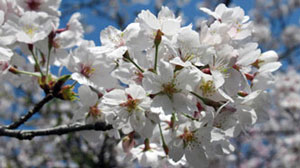
A sample of the photos used to assess the human eye’s response to natural scenes. The response of photoreceptors in the eye are helping researchers understand why our brain perceives color as a combination of red, yellow, green and blue and not other colors, like orange and purple. Most pixels in natural scenes are gray or unsaturated, with colors tending to cluster around red, yellow-green and blue-green.
<関連情報>
- https://news.berkeley.edu/2026/08/31/natures-color-palette-explains-why-everything-we-see-is-a-mix-of-red-yellow-green-and-blue/
- https://opg.optica.org/josaa/abstract.cfm?uri=josaa-43-8-1210
自然の風景における色の まばらな符号化から生まれる独特の色合い Emergence of unique hues from sparse coding of color in natural scenes
Alexander Belsten, E. Paxon Frady, and Bruno A. Olshausen
Journal of the Optical Society of America A Published: July 14, 2026
DOI:https://doi.org/10.1364/JOSAA.598897
Abstract
Our subjective experience of color is typically described by abstract properties such as hue, saturation, and brightness that do not directly correspond to sensory signals arising from cones in the retina. Along the hue dimension, certain colors—red, green, blue, and yellow—appear unique in that they are not perceived as a combination of other colors, and the pairs red–green and blue–yellow appear opposites. However, the anatomical and physiological correlates of these “unique hues” within the brain and the reason for their existence remain a mystery. Here, we demonstrate a direct connection between these hues and the statistics of the natural visual environment. Analysis of simulated cone responses on a dataset of 503 calibrated natural images reveals a strongly non-Gaussian distribution in 3D color space, with heavy tails in distinct, asymmetrically arranged directions. A sparse coding model is then adapted to this data so as to minimize the total sum of coefficients on the basis vectors for representing the data. A six-basis-vector model converges to the four unique hues in addition to black and white. Moreover, we find that the nonlinear nature of inference in the sparse coding model yields both excitatory and inhibitory interactions among latent variables; the former facilitates combining adjacent pairs of unique hues to encode intermediate hues situated between them, while the latter enforces mutual exclusivity between opposite unique hues. Together, these findings shed new light on the distribution of color in the natural environment and provide a linking principle between this structure and the phenomenology of color appearance.